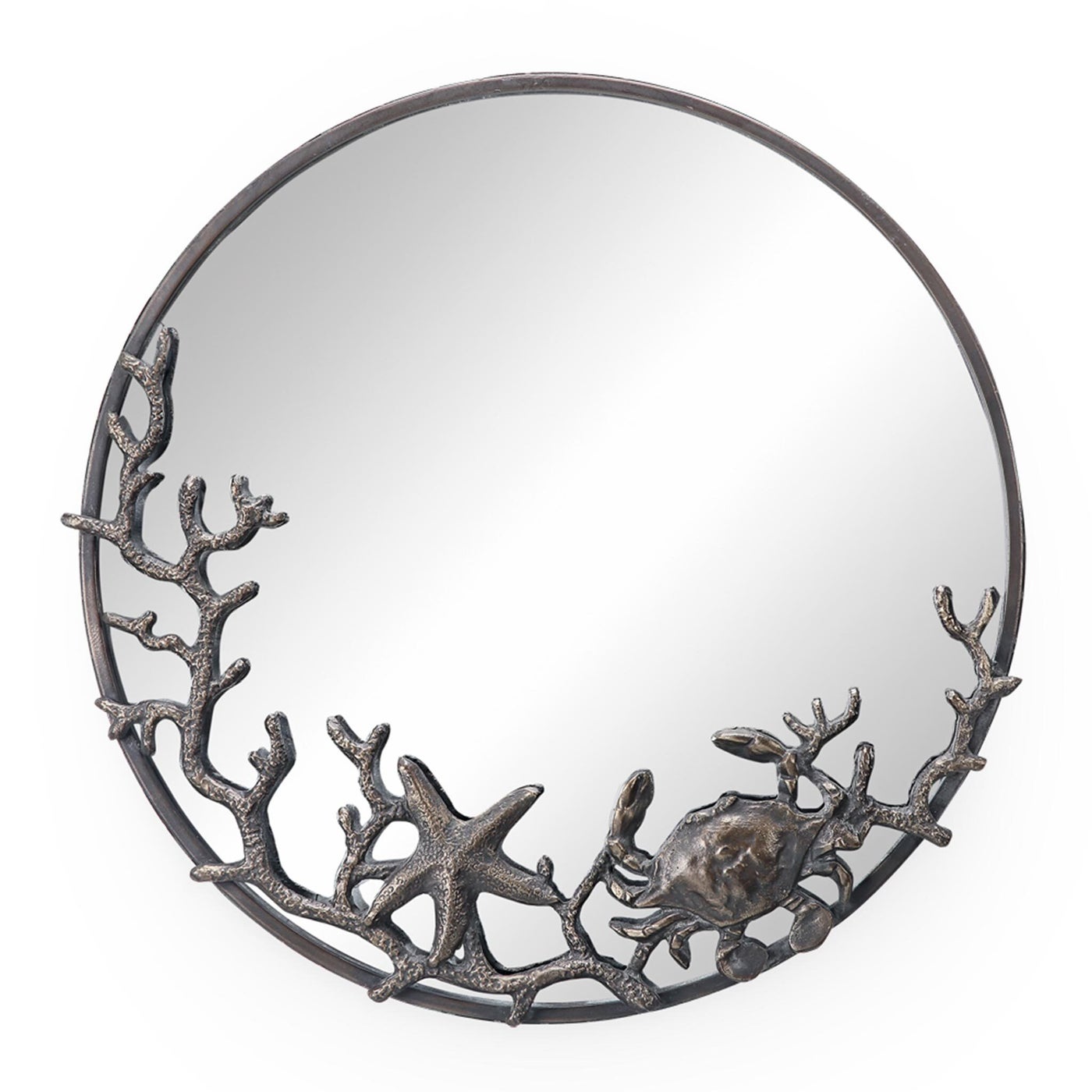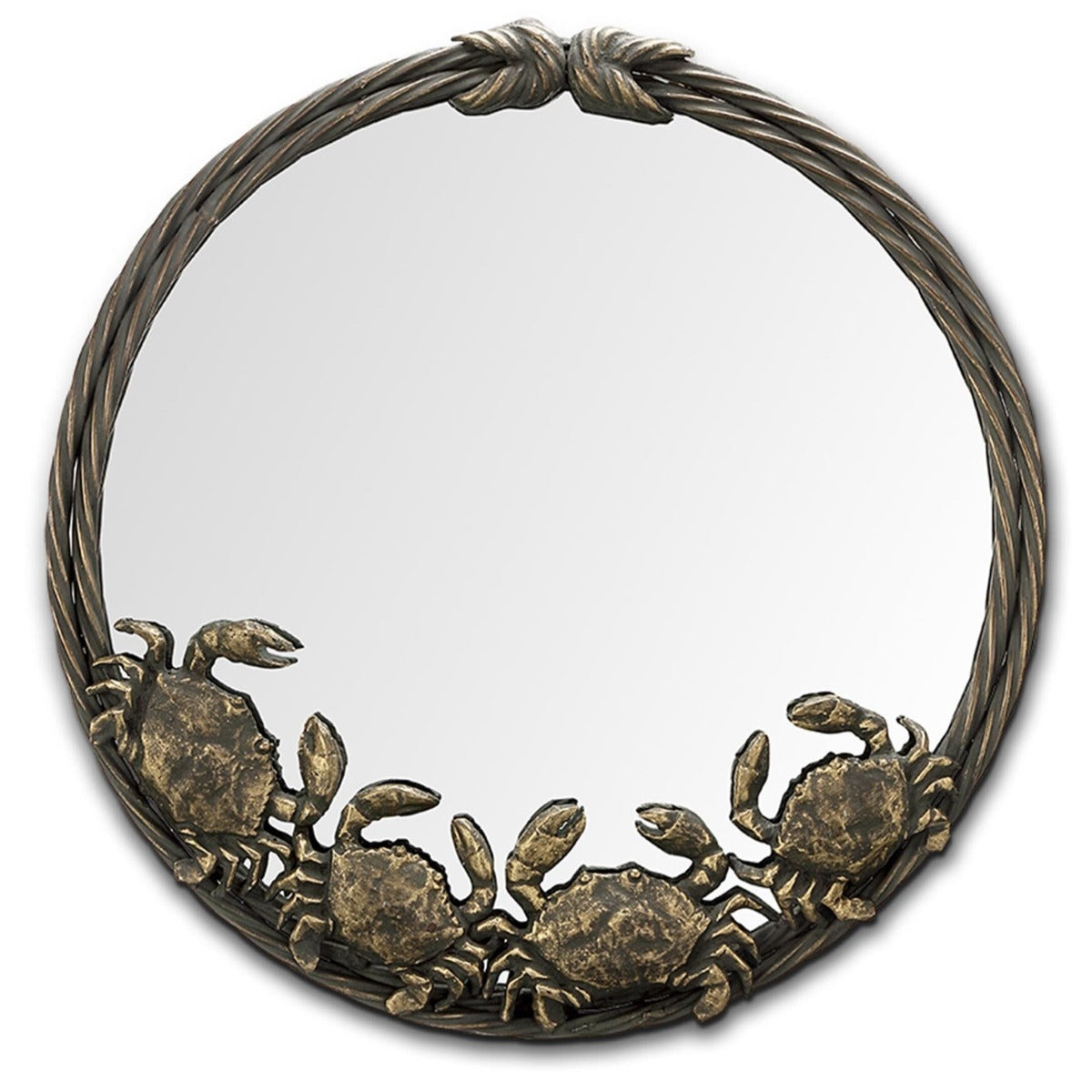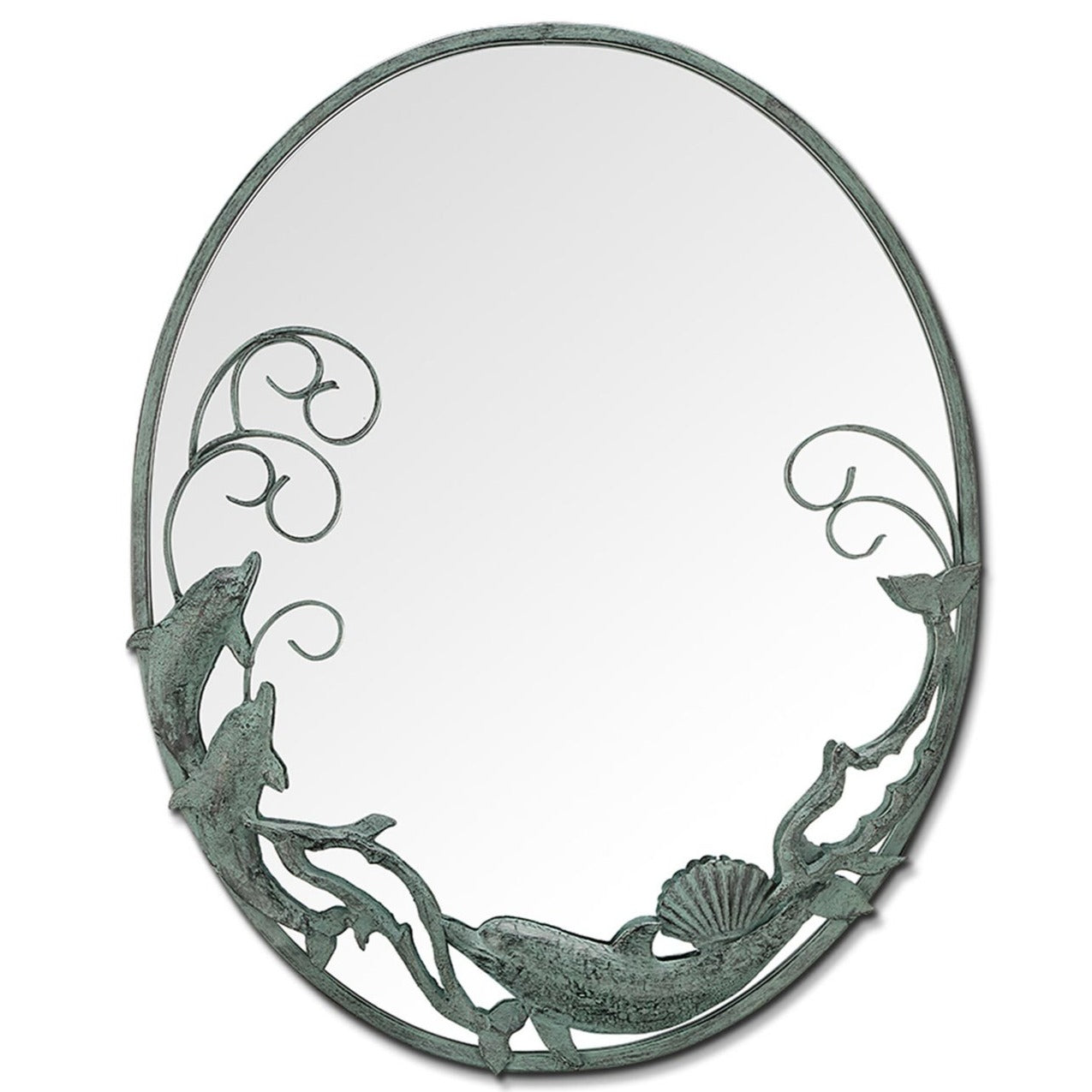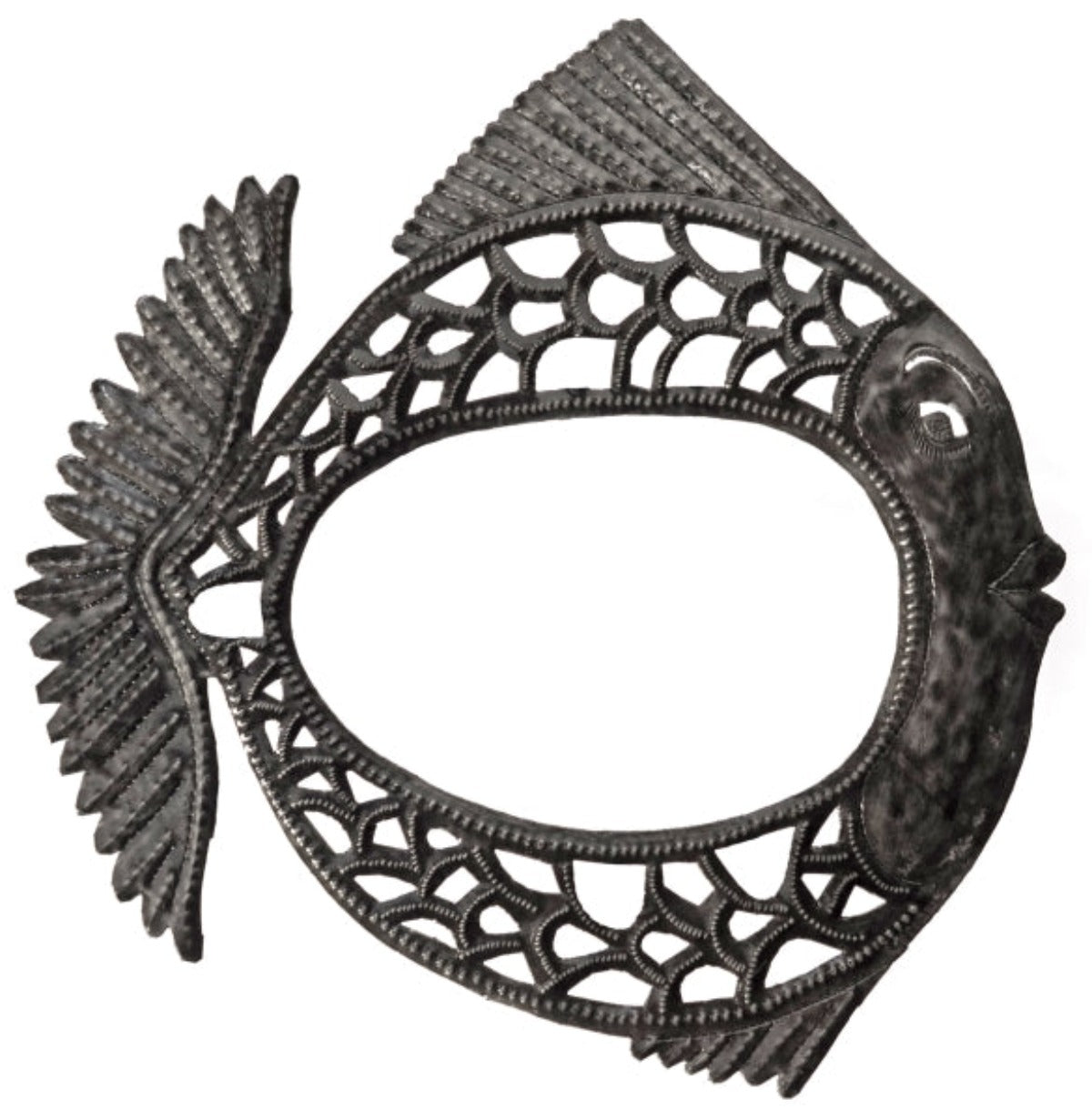
Hand-Forged Character
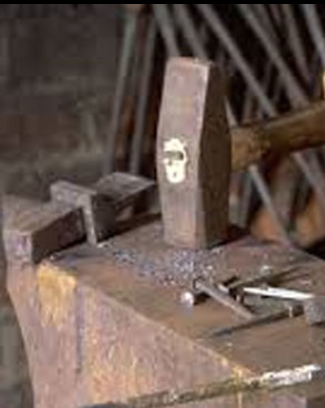
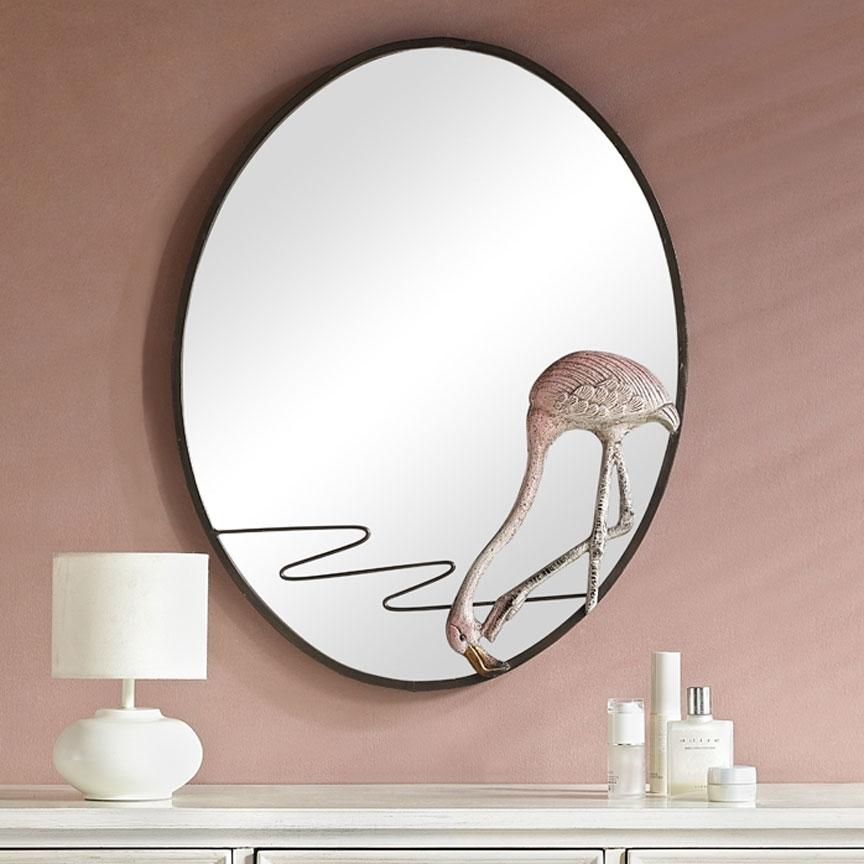
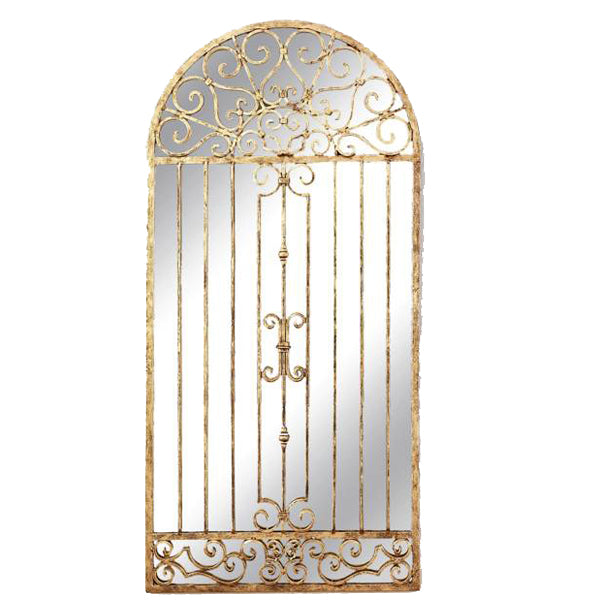
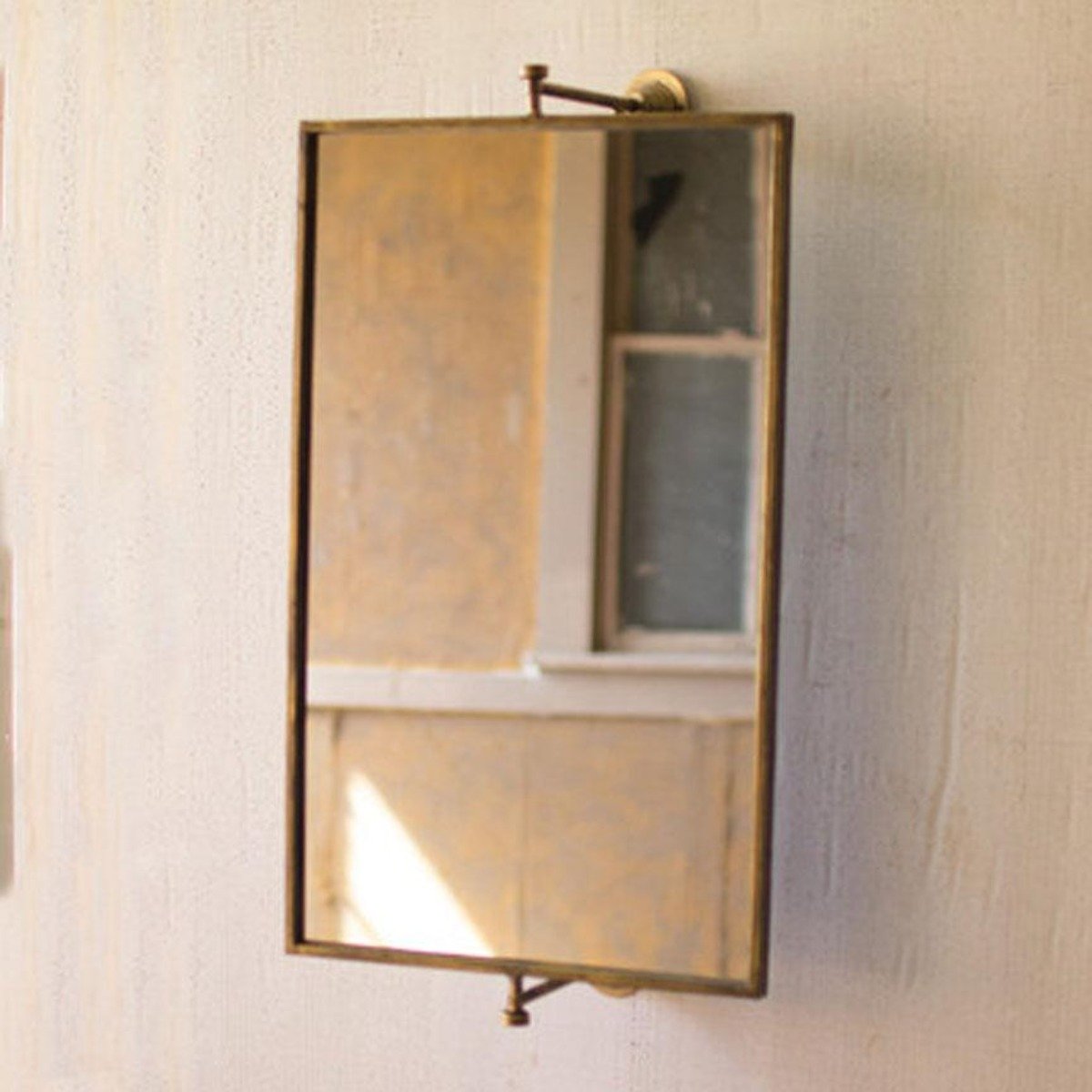
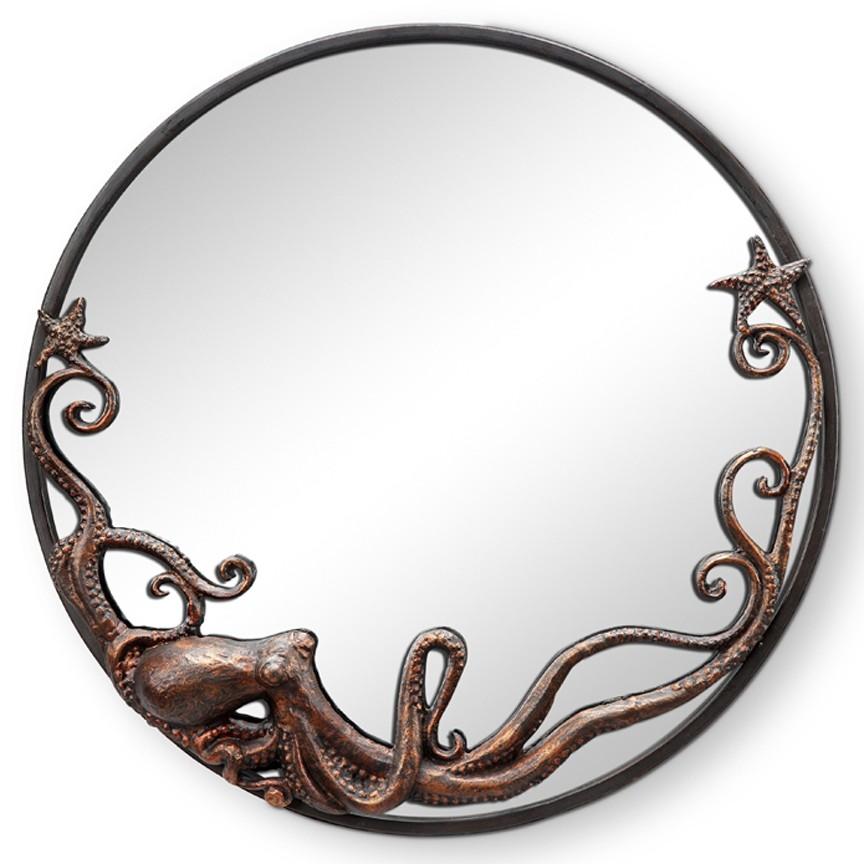
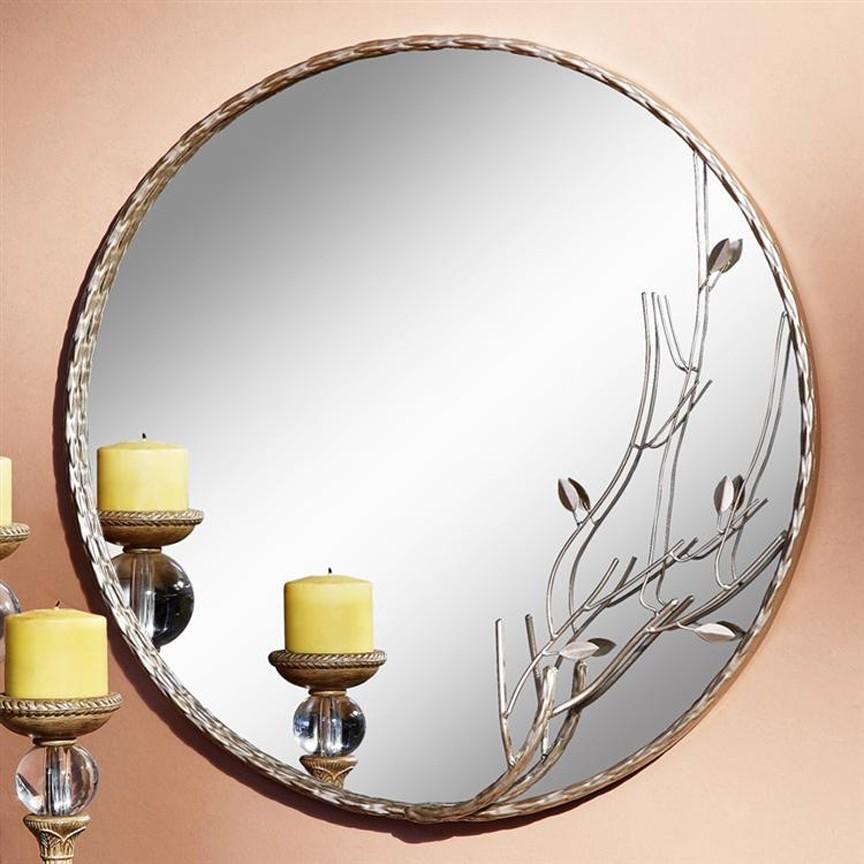
Some wrought iron mirrors are shaped and finished by hand, leaving subtle hammer marks, texture and variation that give the frame a more individual character than a perfectly uniform machine-made edge.
Family-Owned Since 1999 • Shipping Included on Orders $100+
Your Cart is Empty

Decorative Wall Mirrors
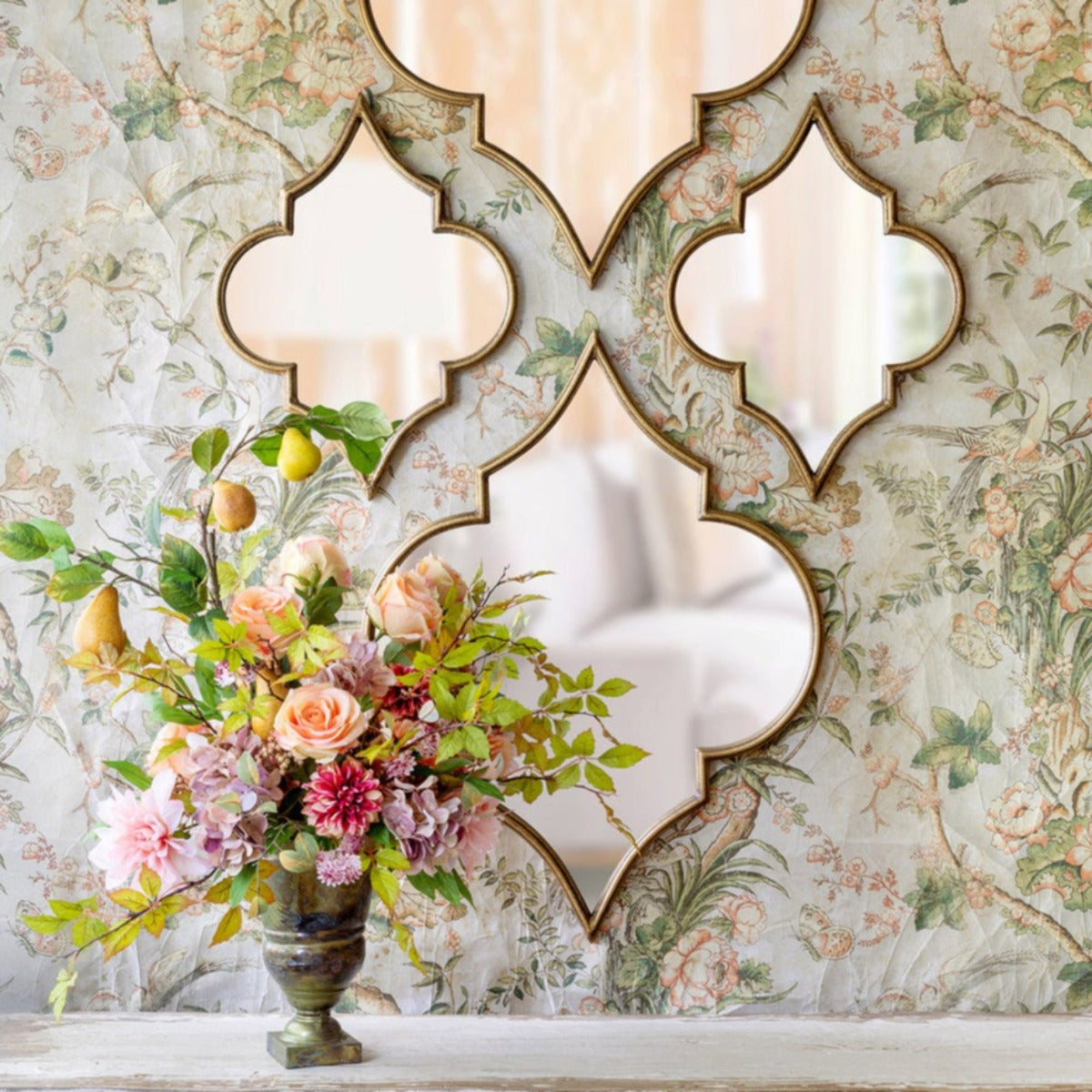
A wall mirror can brighten a room, open a sight line and create a focal point while still serving an everyday purpose. The frame is what turns that reflection into part of the room's design.
Explore wrought iron wall mirrors, decorative metal mirrors, sunburst designs, rustic frames, coastal forms and wood or mixed-material mirrors for entryways, bathrooms, living rooms, bedrooms and gathering spaces.
Before ordering: review the overall dimensions, frame depth, weight, hanging orientation, mounting points and included hardware shown on the individual product page.
Useful and Decorative
Mirrors bring another layer to wall decor because they respond to everything around them. A mirror can catch daylight from a nearby window, reflect an interesting view, repeat the shape of a chandelier or simply make a narrow room feel more open.
The frame determines how much visual presence the mirror carries. A slim hand-forged iron frame can feel architectural and restrained, while an ornate sunburst, sculptural coastal design or textured natural frame can become the main decorative statement on the wall.
An Iron Accents Specialty
Iron can be shaped into everything from a quiet rectangular border to wrapped branches, hammered tabs and sculptural frames with considerable depth and texture.
Some wrought iron mirrors are shaped and finished by hand, leaving subtle hammer marks, texture and variation that give the frame a more individual character than a perfectly uniform machine-made edge.
Iron frames can range from dark natural finishes to copper, bronze and gold-accented patinas. The finish can either create contrast against the wall or connect the mirror with nearby lighting and hardware.
Forged iron works naturally in rustic and lodge interiors, but simpler frames can also add texture to transitional, industrial and contemporary rooms without requiring the entire space to follow a traditional style.
Choose the Shape for the Wall
The outline of a mirror can affect the balance of a room almost as much as the frame itself.
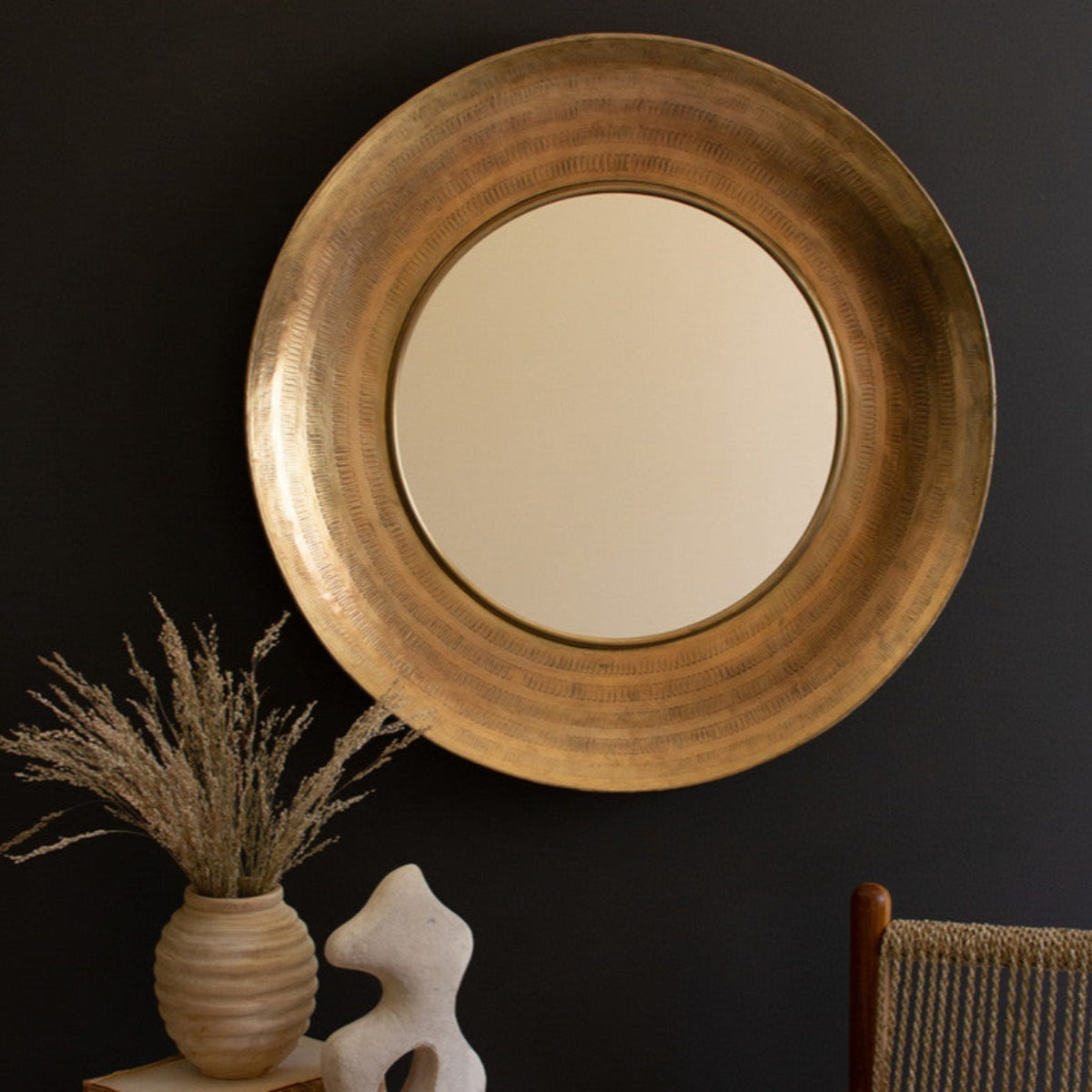
A large wrought iron or metal mirror can anchor an entryway, dining room or broad wall above a console. Compare the full outside frame dimensions with the furniture beneath it rather than judging size from product photography alone.
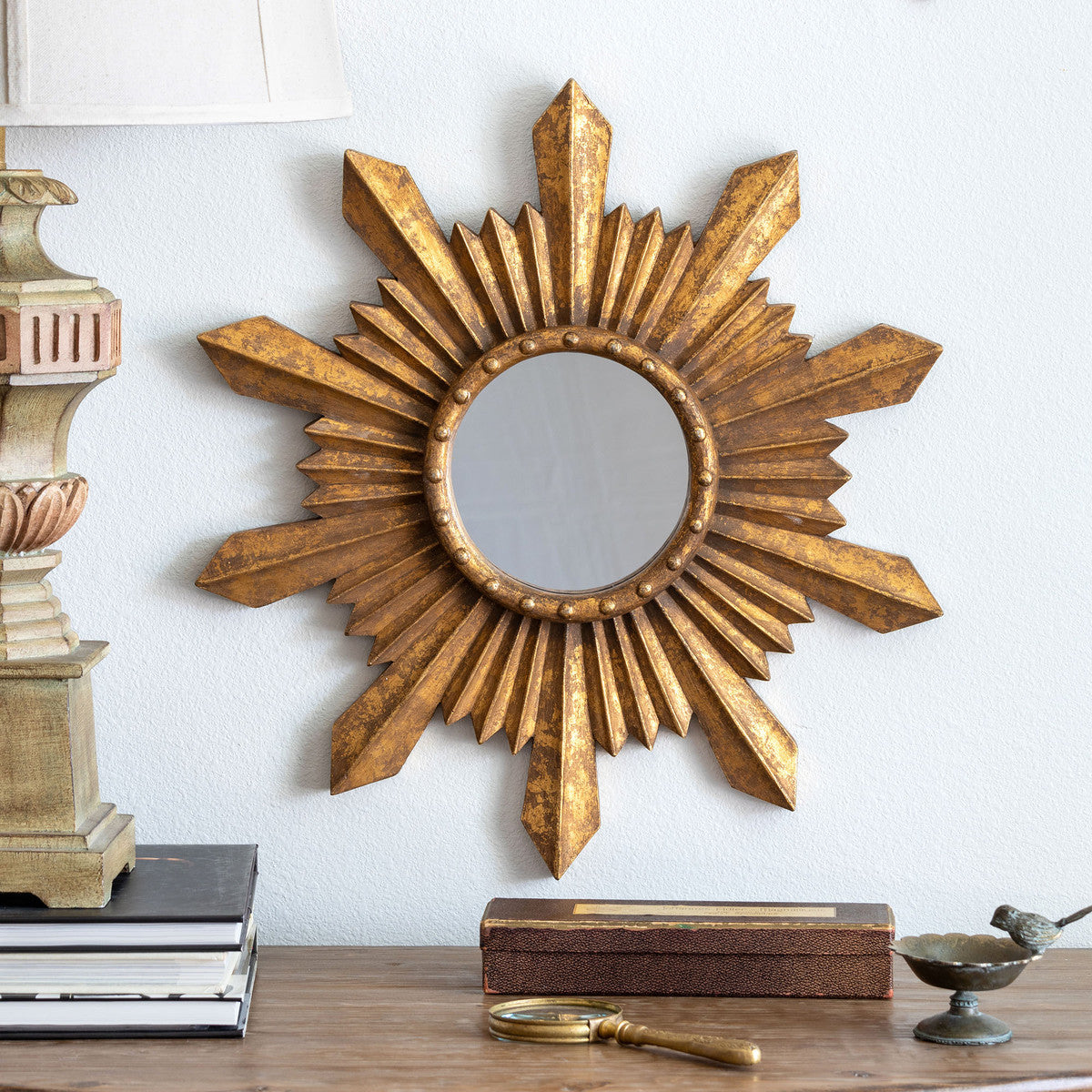
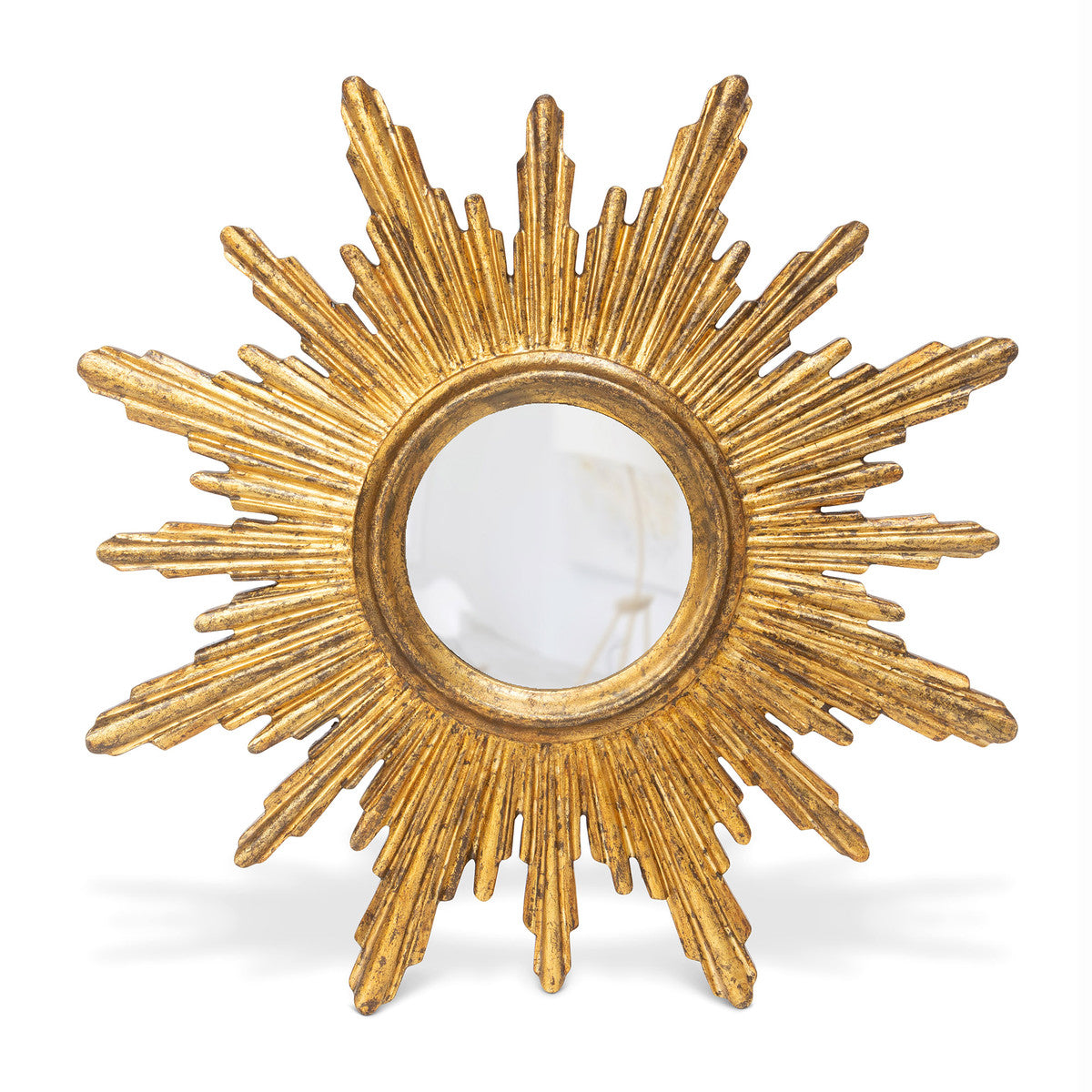
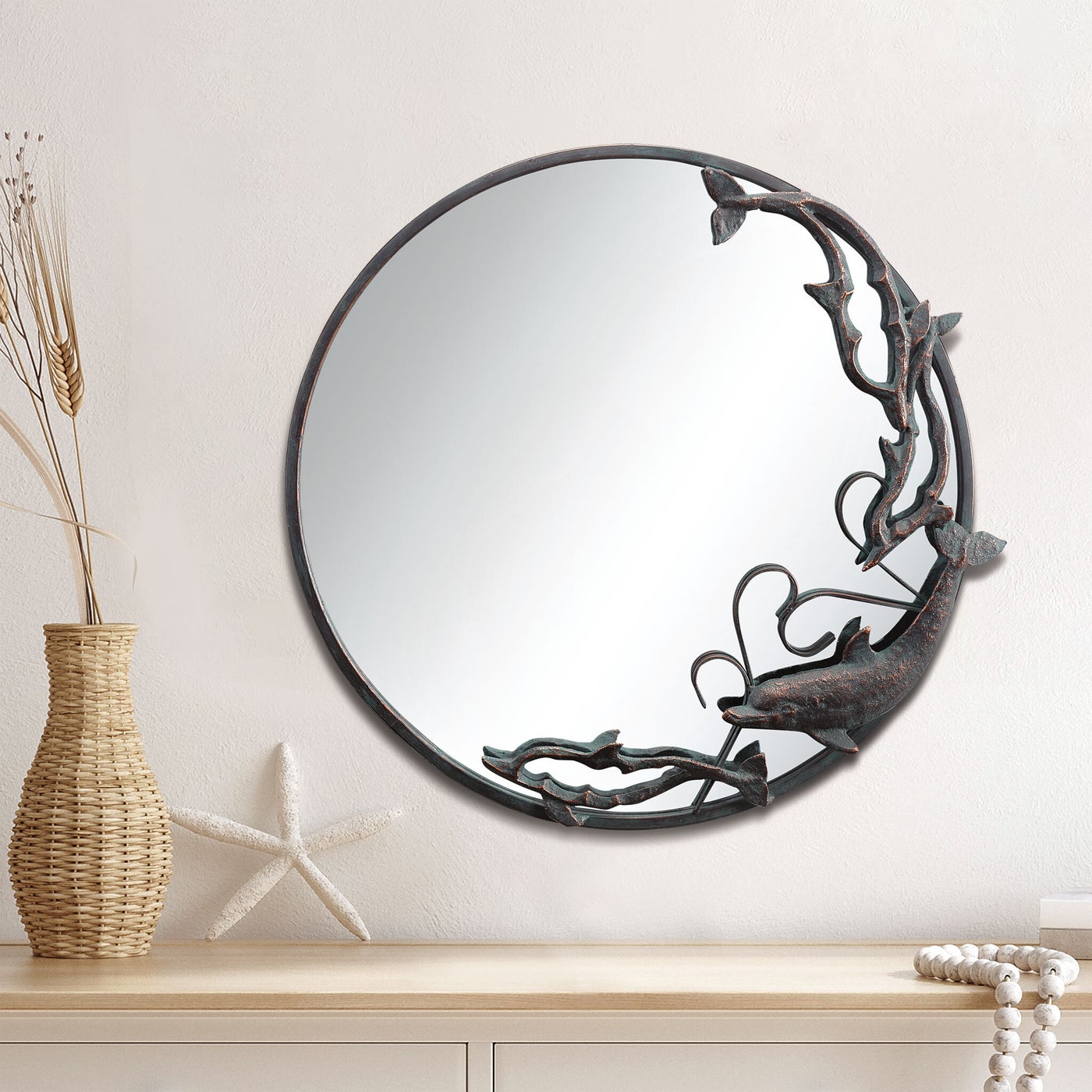
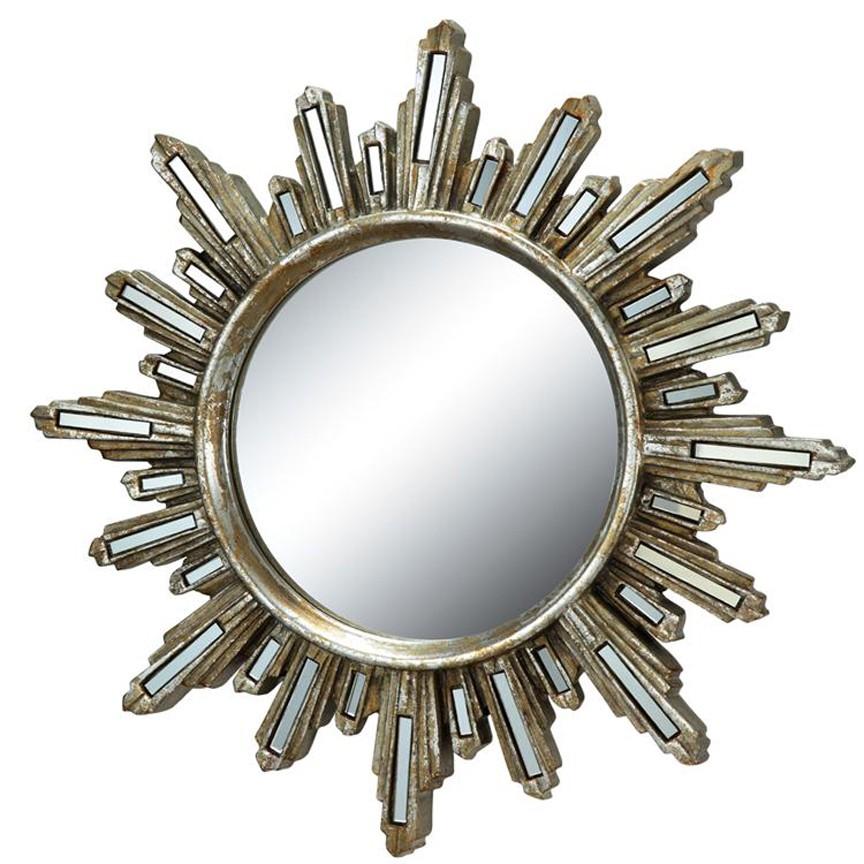
Curved forms soften rooms filled with rectangular furniture, windows and doors. A sunburst mirror adds even more visual movement because the decorative frame extends well beyond the reflective glass.
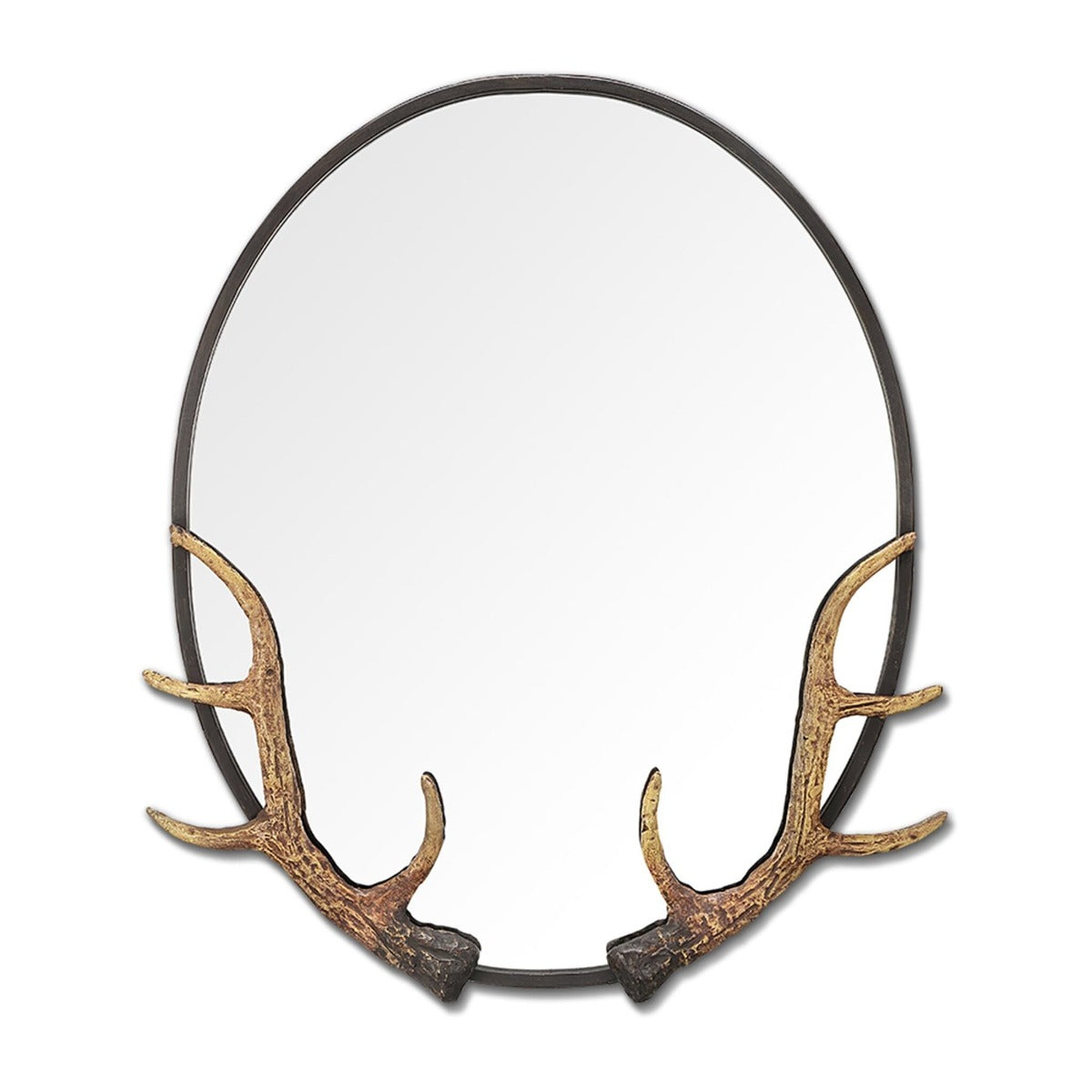
Rectangular mirrors offer structure and useful reflective area, particularly above vanities and consoles. Oval mirrors provide some of the softness of a round shape while retaining a more vertical proportion.
Room by Room
An entry mirror creates an immediate focal point while providing a useful last look before leaving home. In a hallway, a mirror can reflect light and interrupt a long stretch of blank wall without taking up floor space.
Iron and metal wall mirrors can bring strong character above a bathroom sink or powder-room vanity. Check the mirror dimensions, available wall space, fixture placement and the suitability of the individual frame and finish for the room.
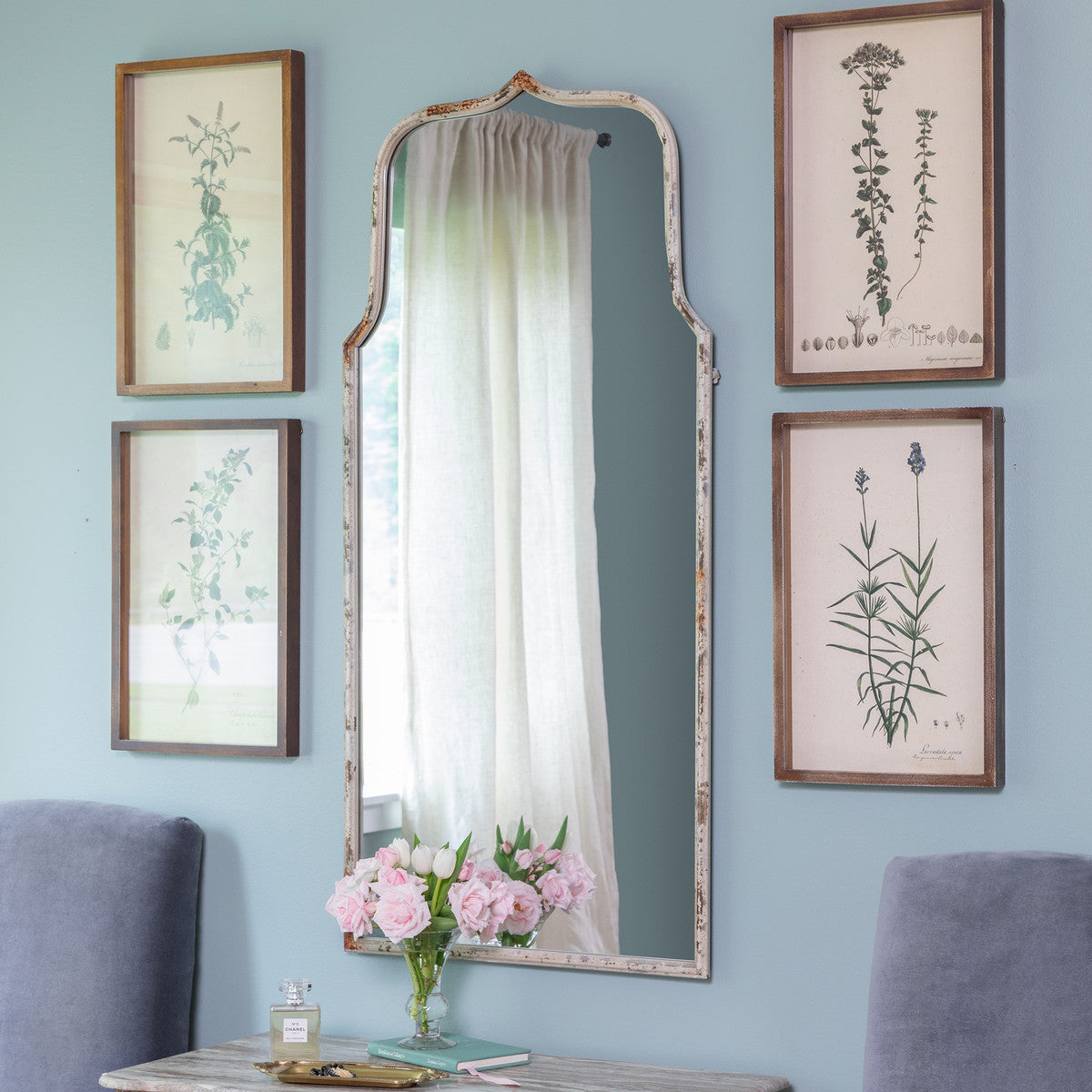
Above a dresser, buffet, mantel or console, a decorative mirror can provide many of the benefits of artwork while reflecting other colors, textures and lighting already present in the room.
Looking Beyond the Wall?
Not every mirror needs to become the main wall feature. Smaller vanity mirrors, tabletop mirrors and hand mirrors can bring the same decorative character to dressers, counters and dressing areas.
The Frame Sets the Style
This collection includes more than one material and manufacturing method. Review the individual product specifications when a particular frame material, finish or construction is important.
Hand-forged iron can show hammered surfaces, shaped edges, wraps and other blacksmith details. These mirrors often bring more texture and architectural presence to the wall.
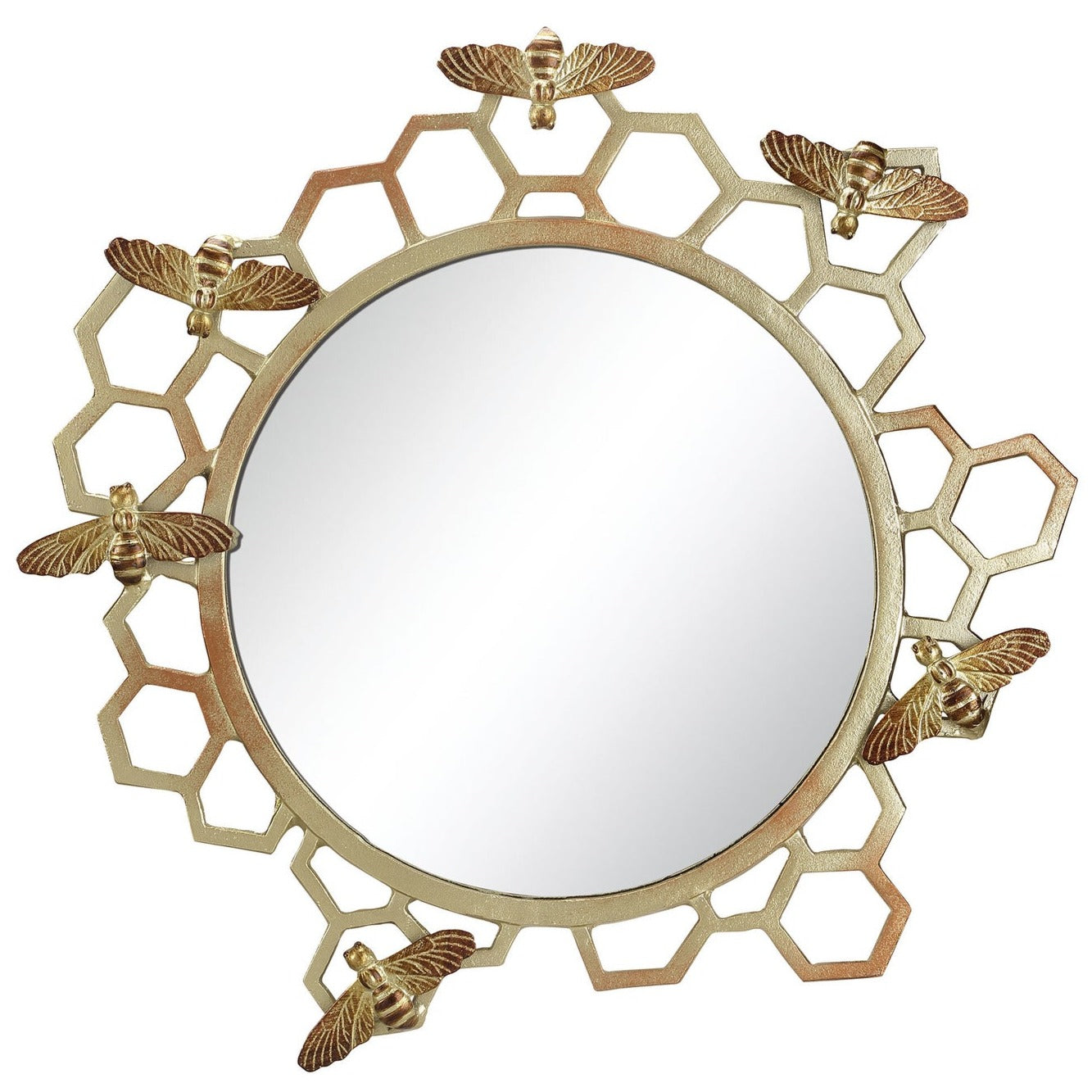
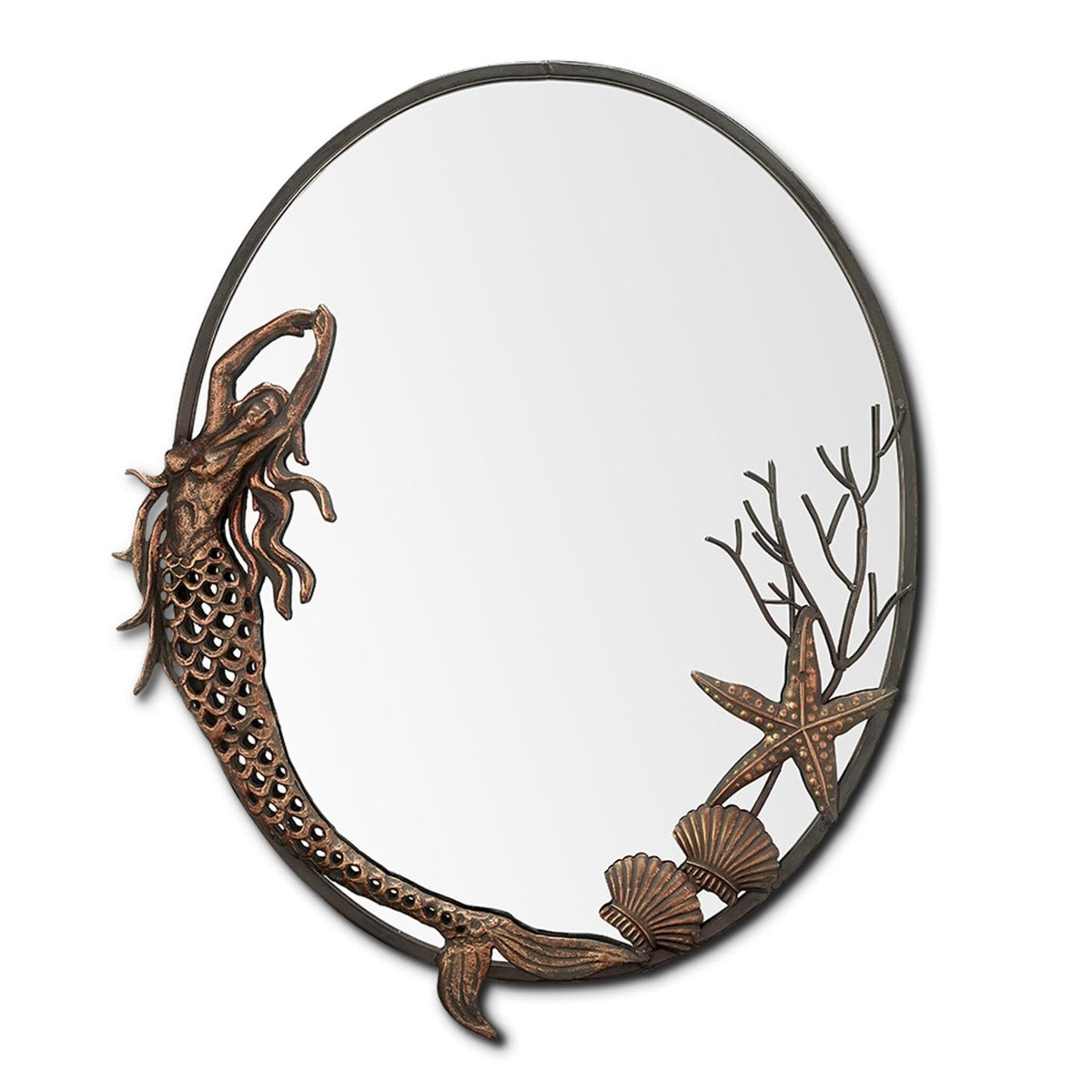
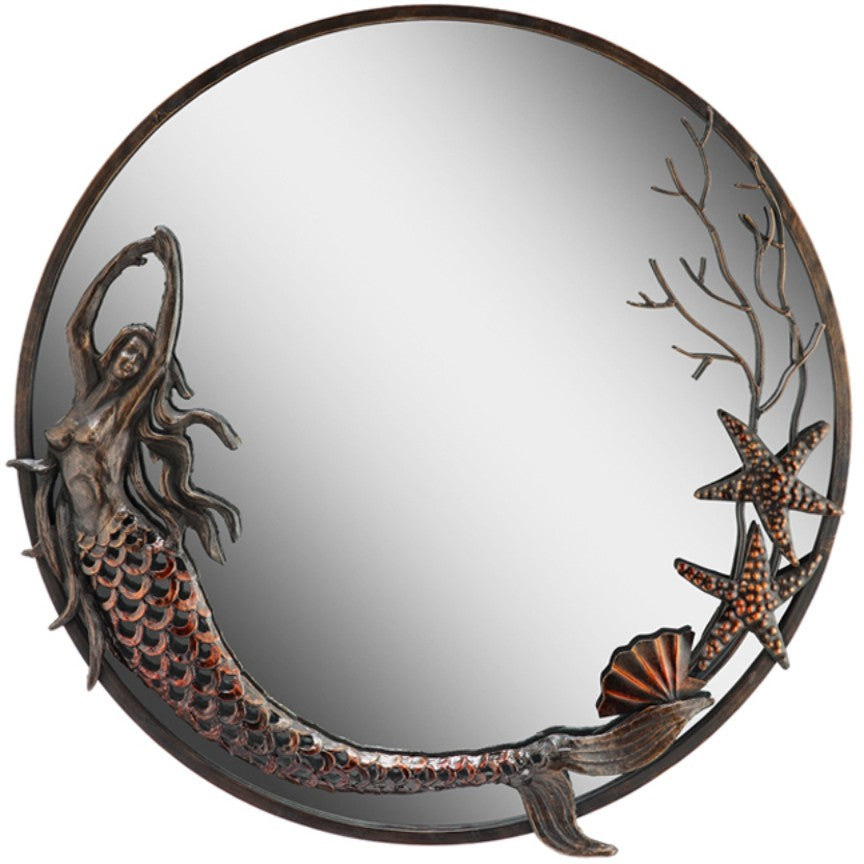
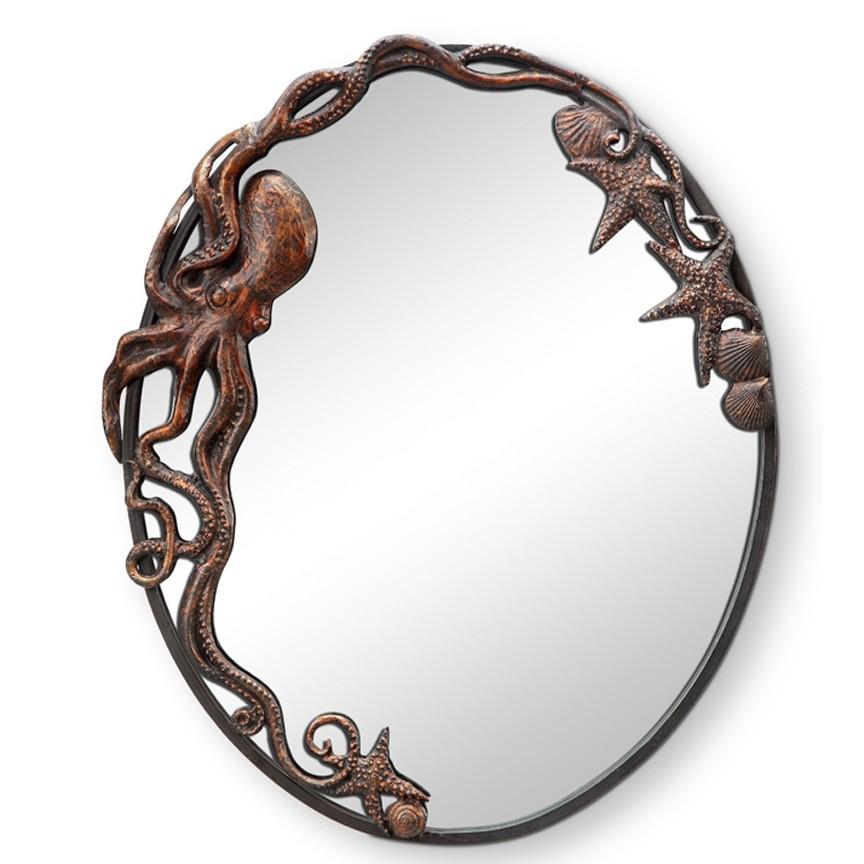
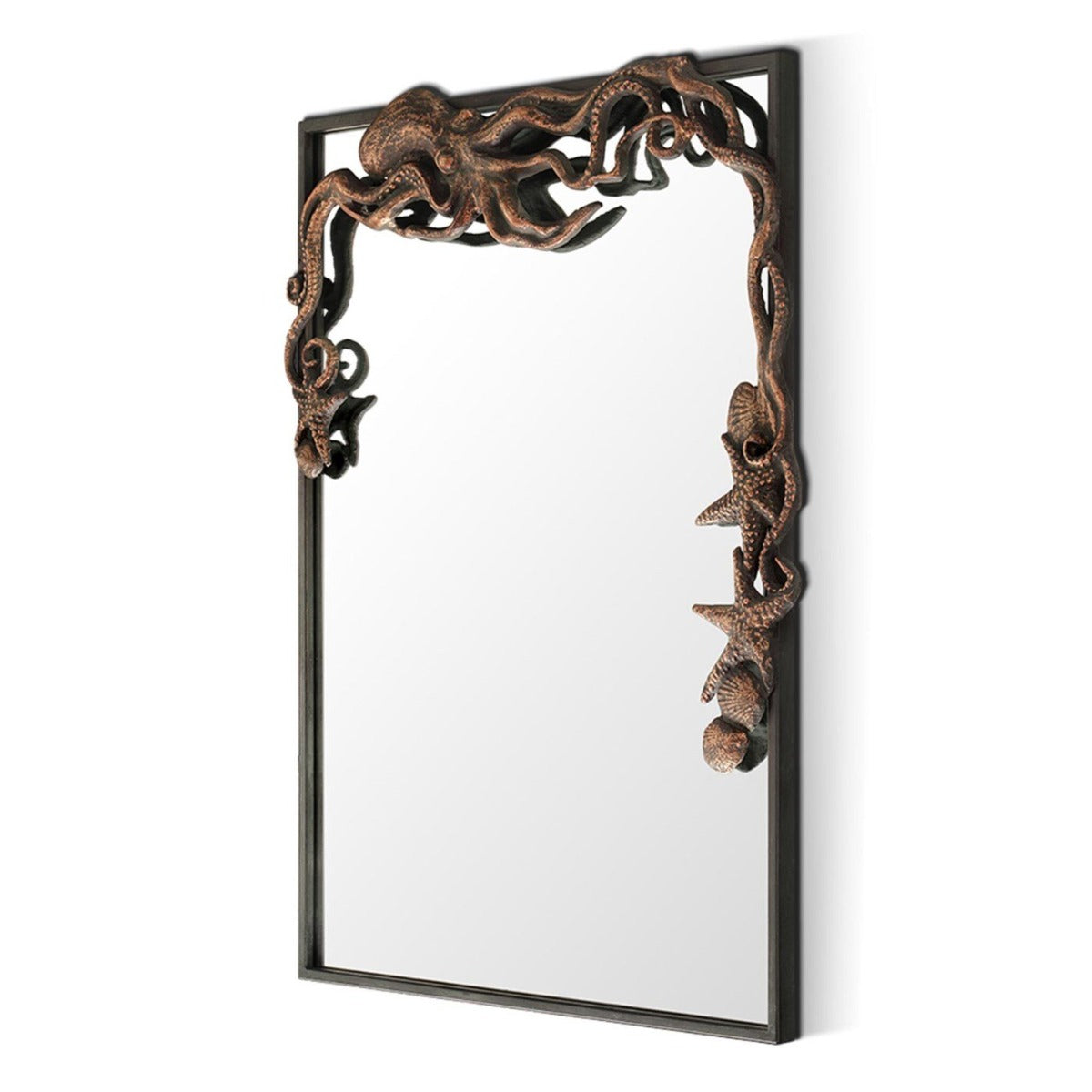
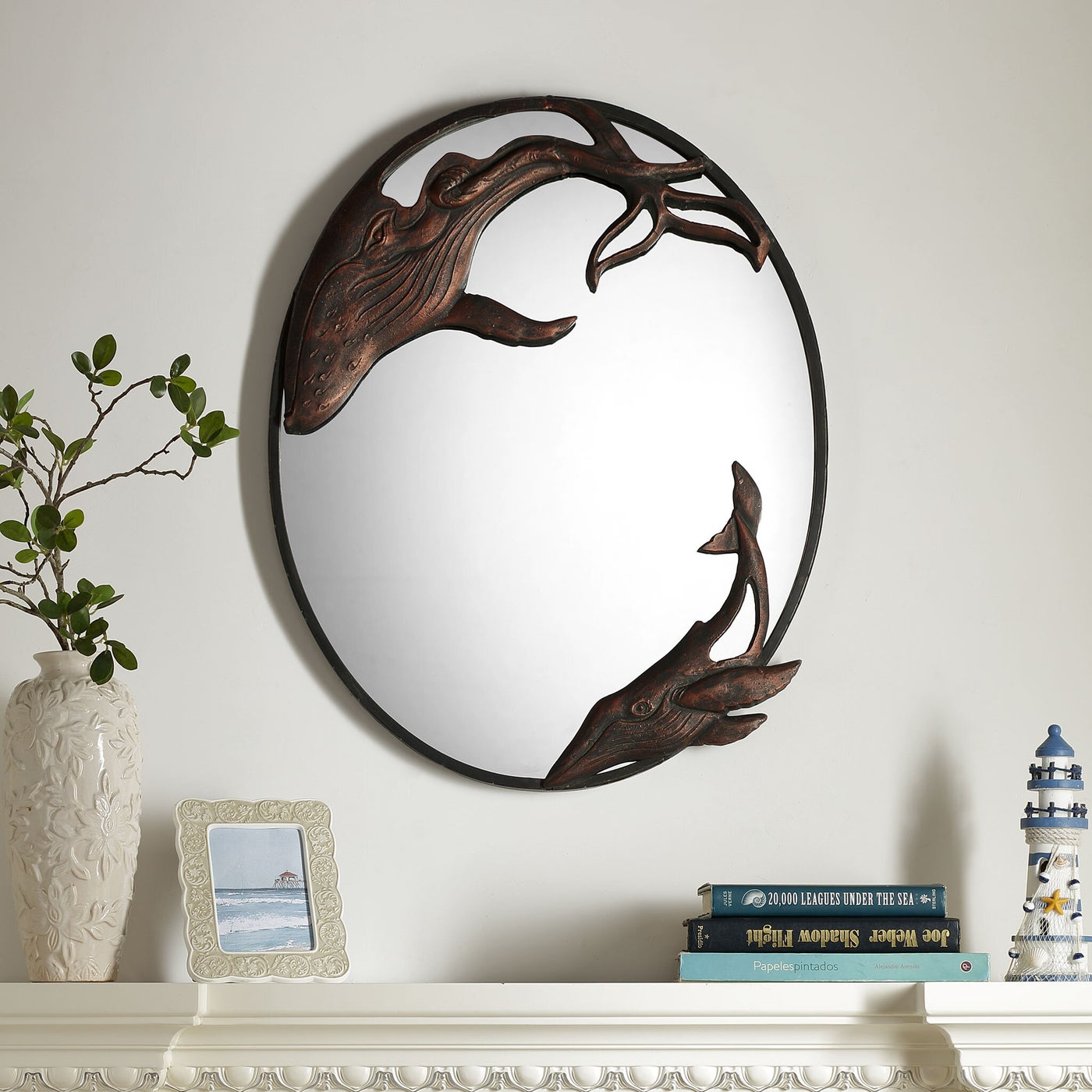
Metal mirrors may use brass, steel or other finished metals to create everything from simple frames to sunbursts, botanical forms and sculptural coastal designs.
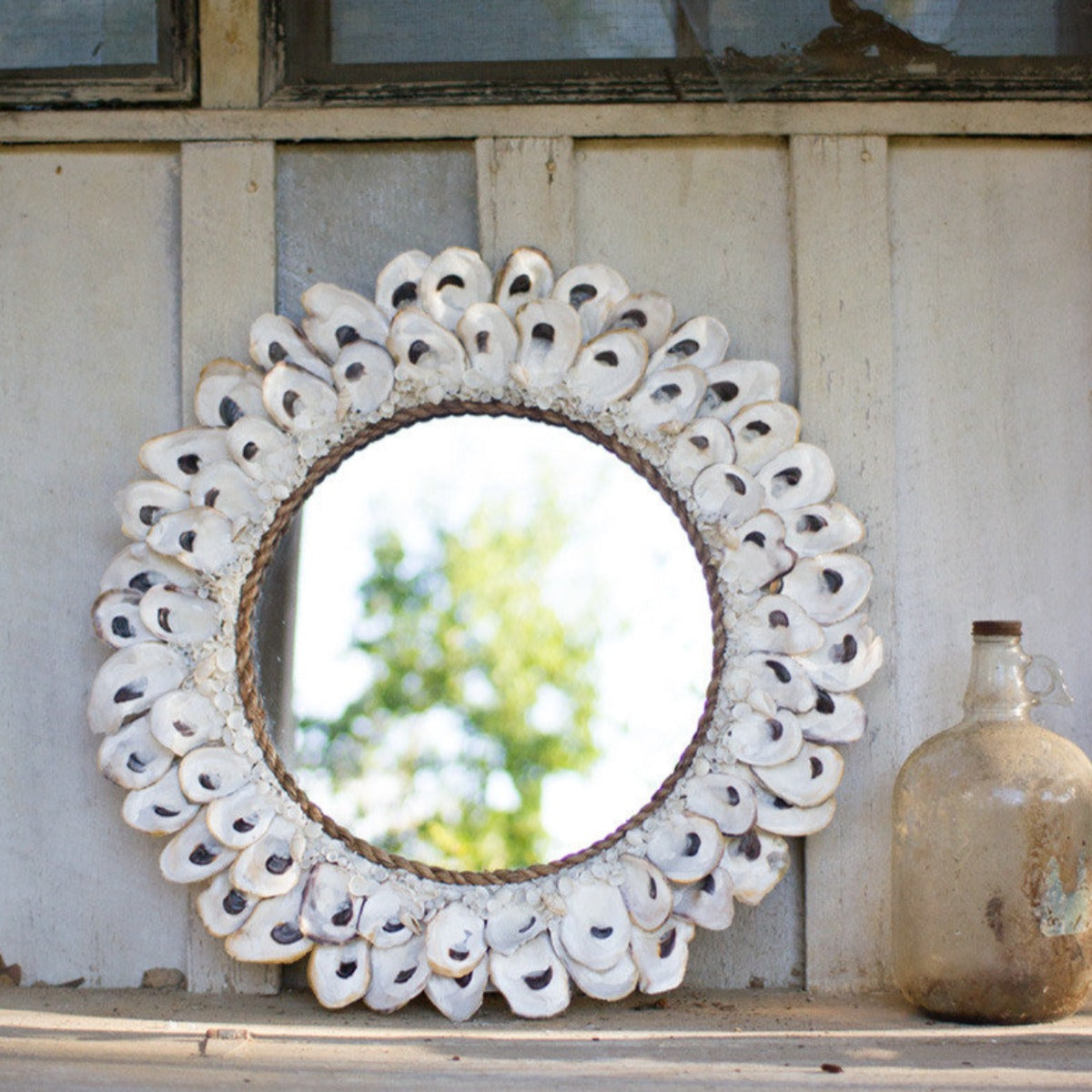
Wood, rope, shells, resin and other natural or composite materials introduce warmth, color and texture and allow the mirror to work in rooms where an all-metal frame would feel too formal or visually strong.
Before You Choose the Size
Above a console, dresser or buffet, the mirror should feel visually connected to the furniture beneath it. A useful starting point is a mirror or grouping that is narrower than the furniture rather than extending beyond its edges.
For larger walls, mark the complete outside frame dimensions with painter's tape. This provides a far better sense of scale than relying on a room-setting photograph.
Above a bathroom vanity, consider the vanity width, faucet location, sconces and ceiling height together. Make sure there is enough room for the complete decorative frame—not only the reflective glass.
If a mirror can hang either vertically or horizontally, compare both arrangements before installation. Changing orientation can completely alter the relationship between the mirror and the furniture or fixtures around it.
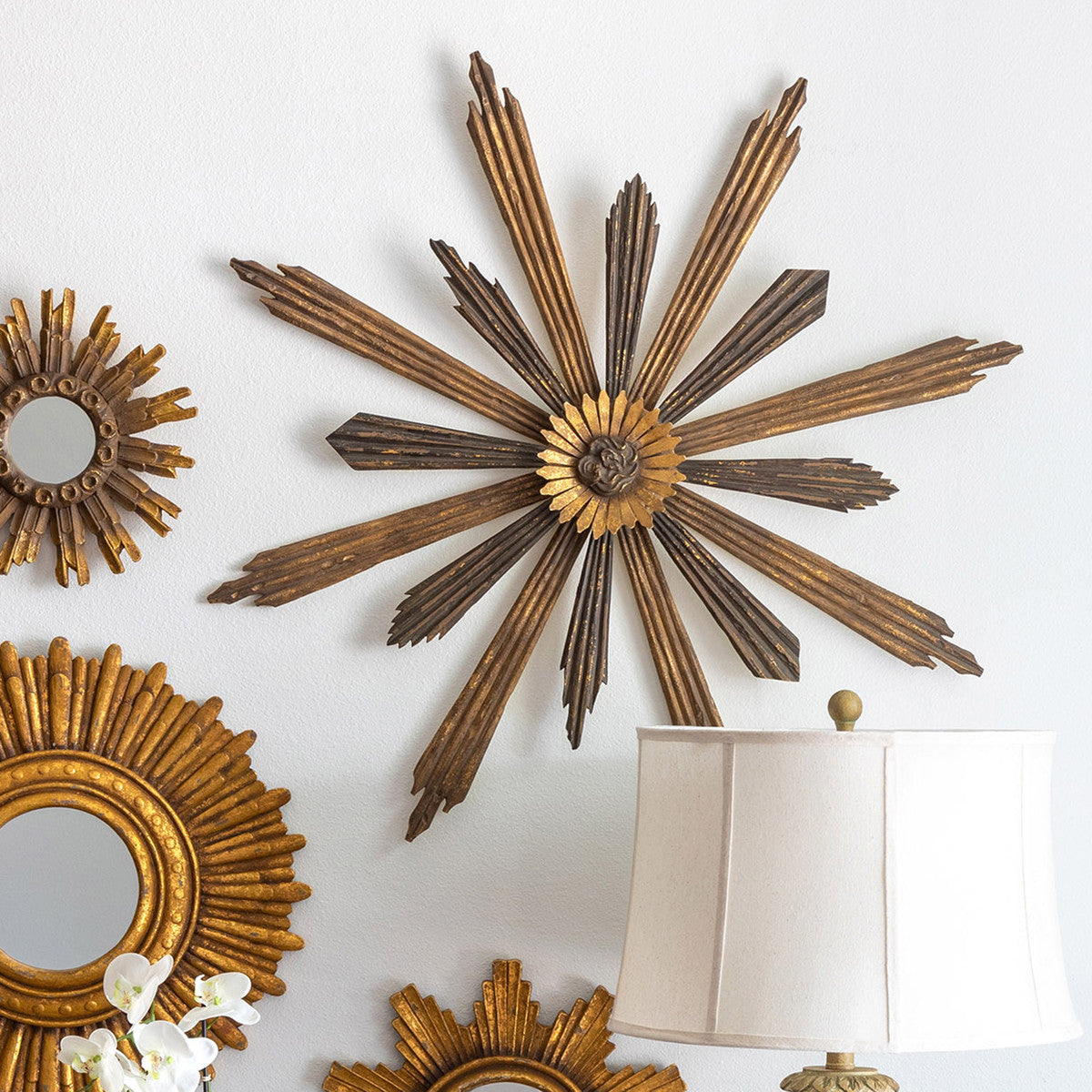
Decorative frames, sunburst rays and sculptural ironwork may extend well beyond the visible mirror glass. Measure the full outside width, height and depth before ordering.
Hanging & Care
Decorative iron and metal mirrors can be considerably heavier than framed prints. Review the listed product weight before selecting anchors or choosing an installation location.
Drywall, studs, masonry, tile and other surfaces require different mounting methods. Use fasteners appropriate for both the wall construction and the weight of the mirror.
Clean the mirror glass with an appropriate glass cleaner while taking care around decorative frames and hand-applied finishes. Follow any product-specific care information for metal, wood, rope or other frame materials.
Common Questions
Metal mirror is the broader category and can include many different metals and manufacturing methods. Wrought or hand-forged iron mirrors specifically use iron that has been shaped or worked to create the frame. Review the individual product specifications for the exact material and construction.
Many wall mirrors can work beautifully above a vanity when their size, mounting system, frame and finish are appropriate for the room. Measure the available space carefully and consider the bathroom's moisture level and the individual product materials before installation.
There is no single required proportion, but the mirror generally looks more balanced when it is narrower than the furniture beneath it. Consider the full frame dimensions rather than only the mirror glass and use painter's tape to test the scale on the wall.
A sunburst mirror uses decorative rays extending outward from a central round mirror. The radiating frame makes it function much like wall art, creating a strong focal point even when the reflective portion itself is relatively small.
Some mirrors are designed to hang in either orientation while others have a fixed hanging direction. Check the individual product description and hanging hardware before planning the installation.
It varies by product and manufacturer. A mirror may include attached hangers without including the wall fasteners themselves. Review the individual specifications and use anchors or fasteners appropriate for the mirror weight and your wall construction.
Begin with the mirror's listed weight, hanging points and the construction of the wall. Heavy mirrors may require mounting into studs, blocking, appropriate anchors or another secure support method. Professional installation may be appropriate for particularly large or heavy pieces.
Do not assume a mirror is suitable for exterior exposure simply because it has a metal or iron frame. Moisture and weather can affect the frame, backing and reflective surface. Use a mirror outdoors only when its individual product information indicates that it is appropriate for the intended location.
Continue Shopping

Special Savings & Exclusive Offers