Your Cart is Empty

Beautiful window treatments depend on more than fabric. The rod, brackets, rings and decorative hardware determine how the treatment is supported, how it moves and how finished the window feels once everything is installed.
Our collection of custom drapery hardware includes decorative iron and metal curtain rods, brackets, rings, drapery accents, architectural crowns and scarf holders. Many pieces are made to order in the USA and hand-finished in designs inspired by the character of 18th- and 19th-century European ironwork.
Whether you need a straightforward adjustable rod, a custom-length curtain rod, specialized hardware for a bay, bow, corner or arched window, or decorative details that turn the treatment into an architectural feature, begin with the way the window needs to function and build the hardware system around it.
These collections are designed to work together so the rod, supports, rings and decorative details can be planned as one coordinated treatment.

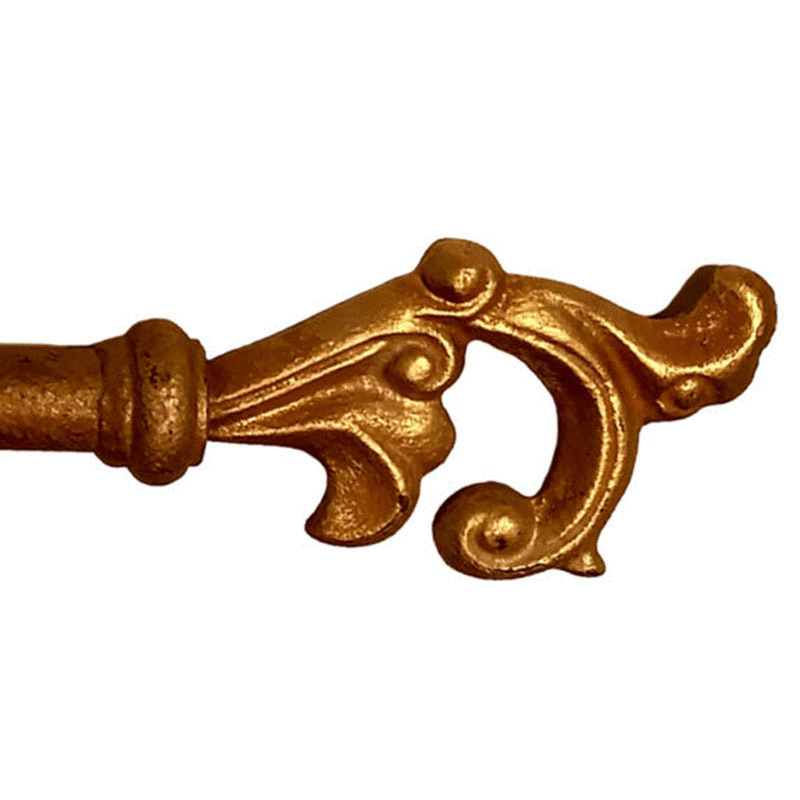
Decorative metal motifs for cornices, fabric panels, pillows and other textile treatments, available with mounting styles suited to different applications.
Shop Drapery Accents →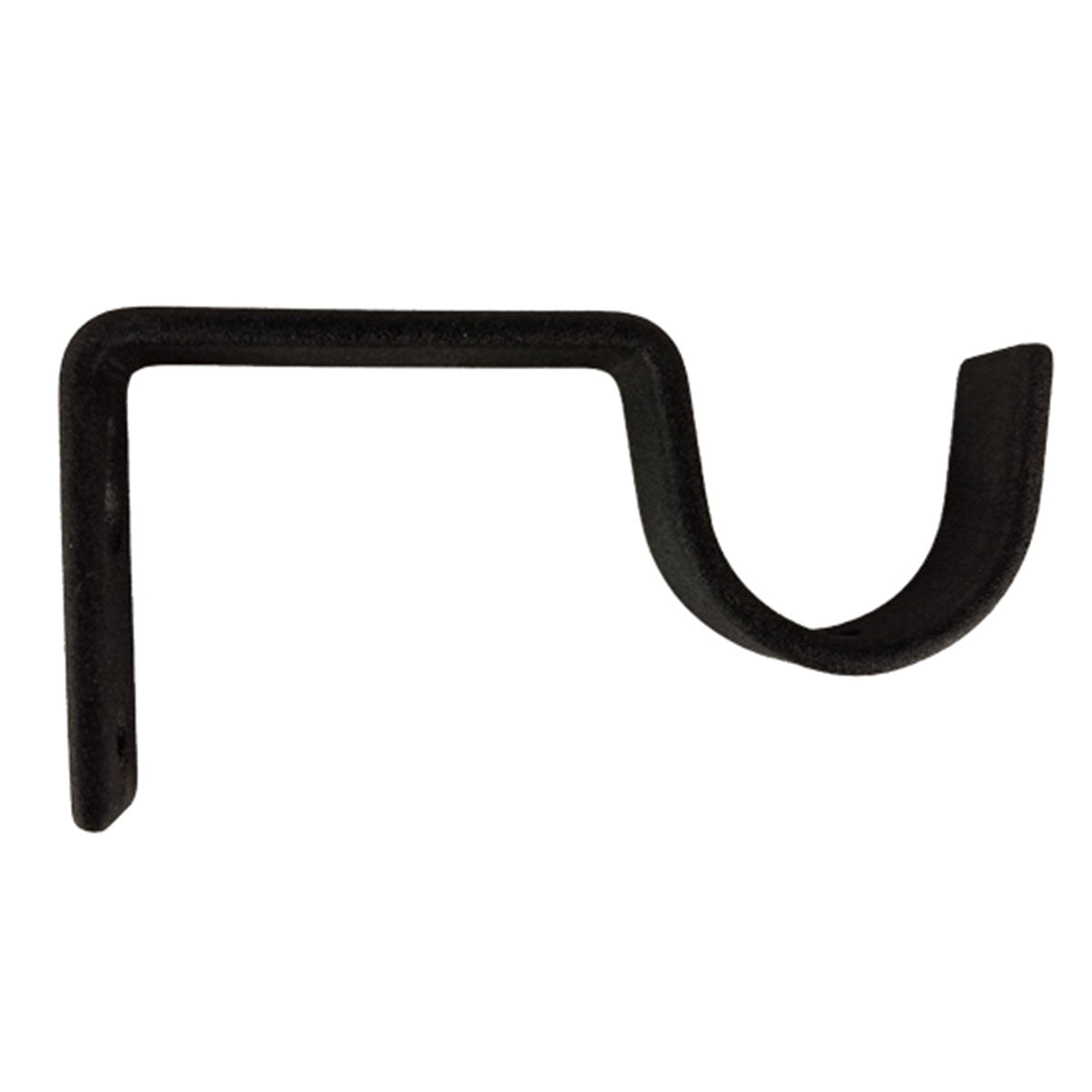
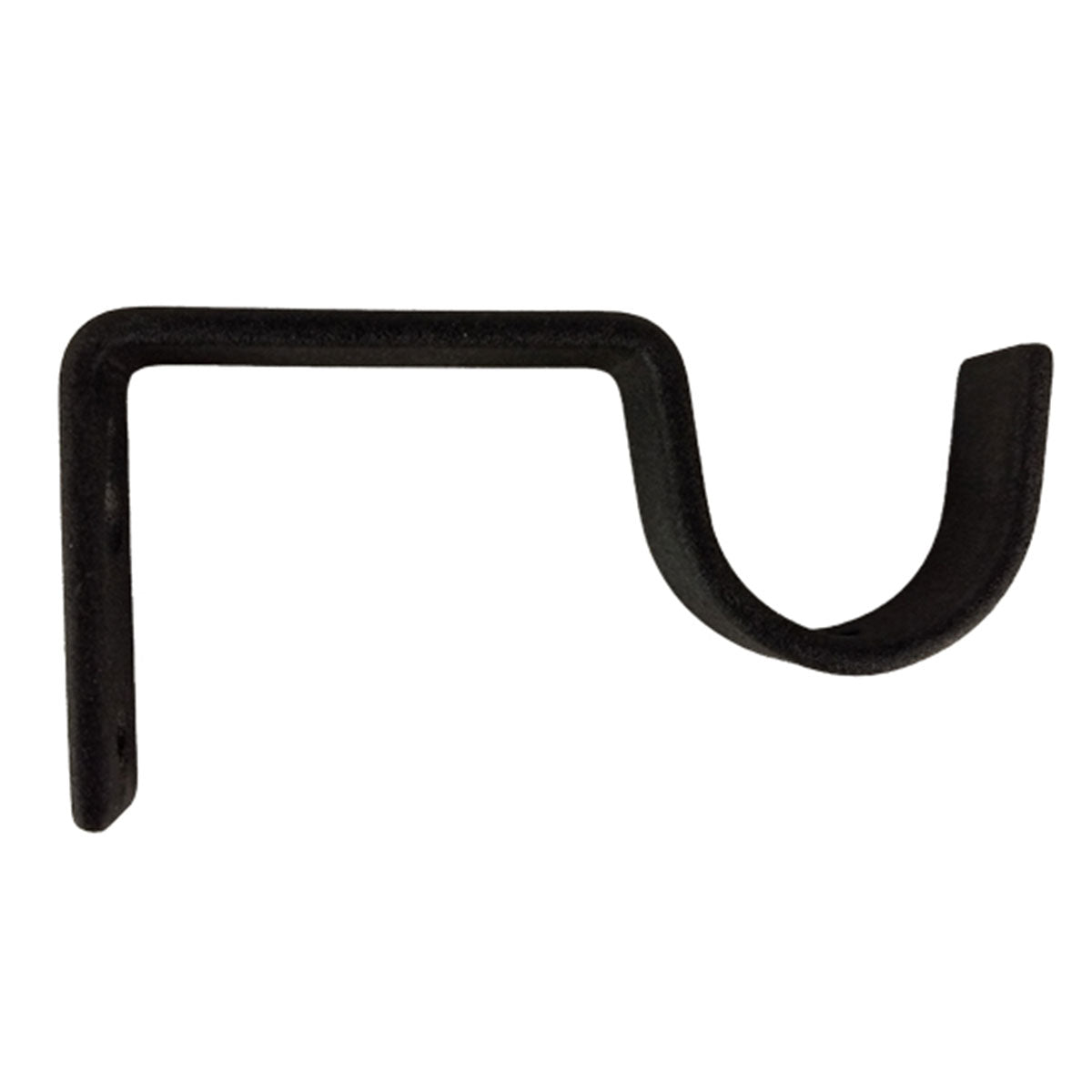
Wall, ceiling, inside-mount, double-rod and specialty brackets that support the rod while establishing the projection and clearance of the complete treatment.
Shop Drapery Brackets →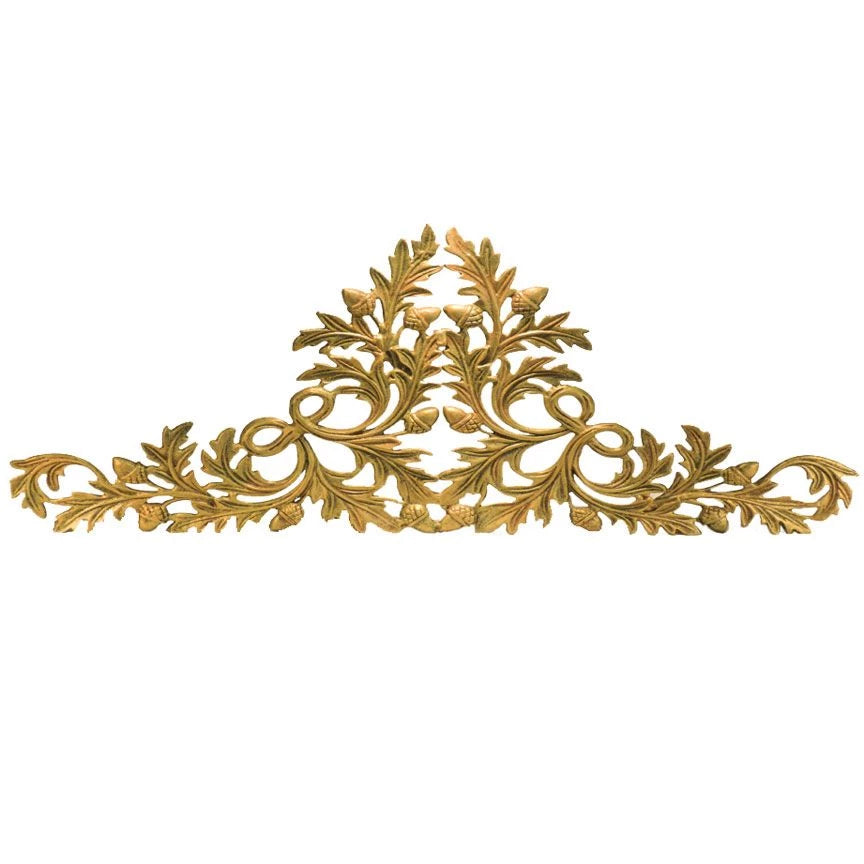
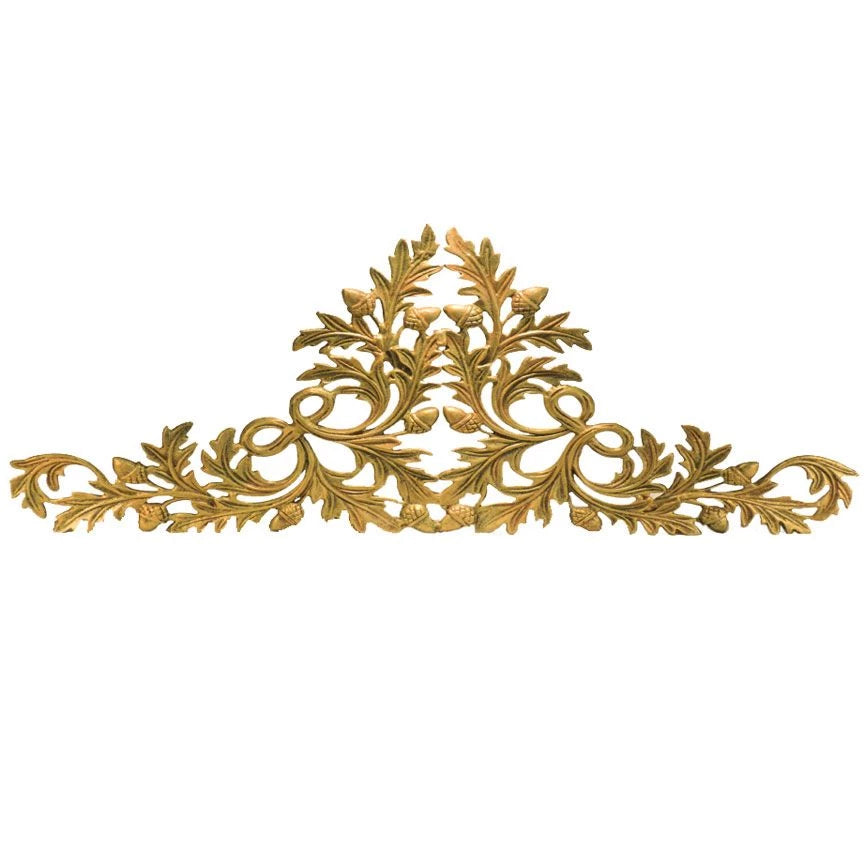
Sculptural crowns and pediments that add architectural drama above windows, doorways, beds and other decorative installations.
Shop Drapery Crowns →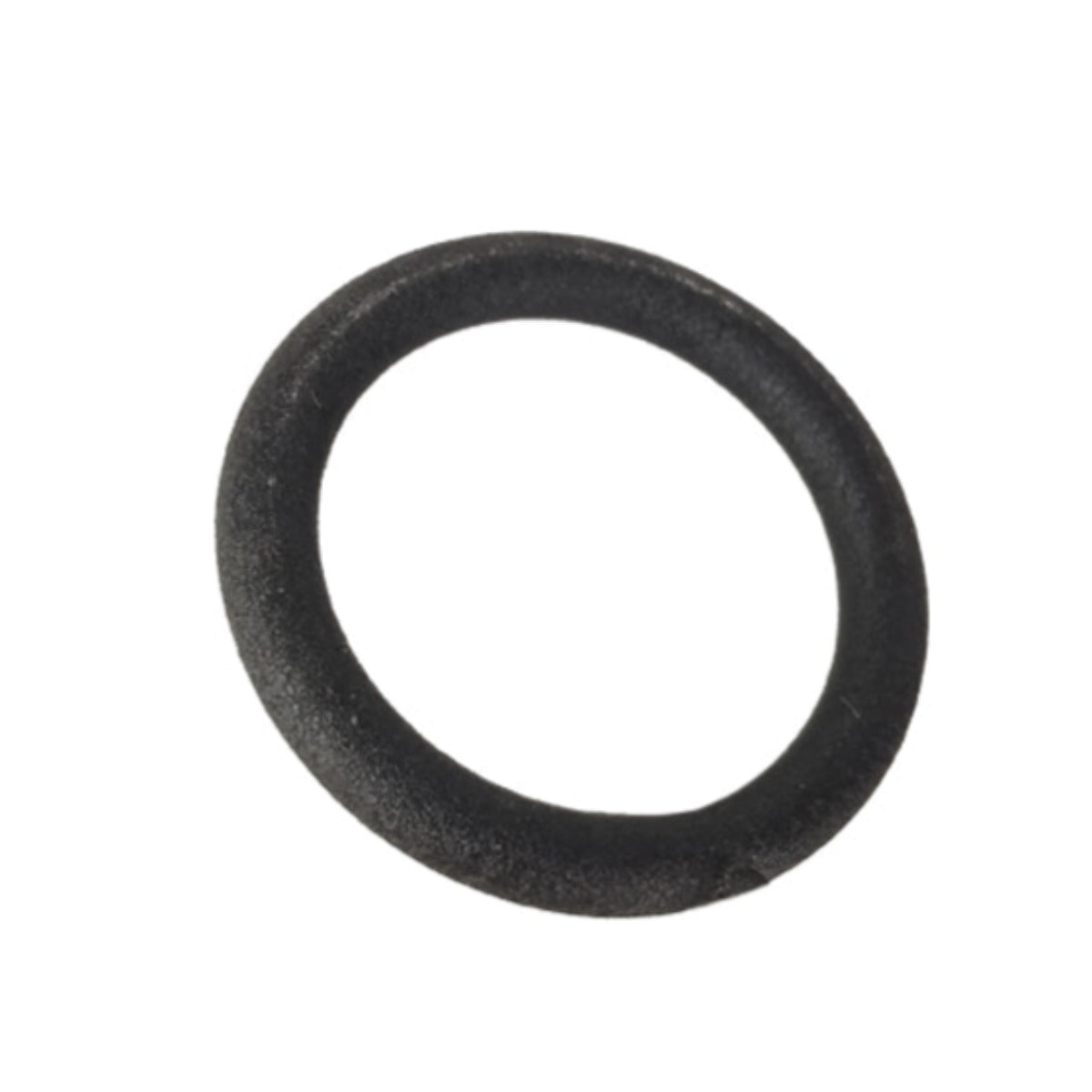
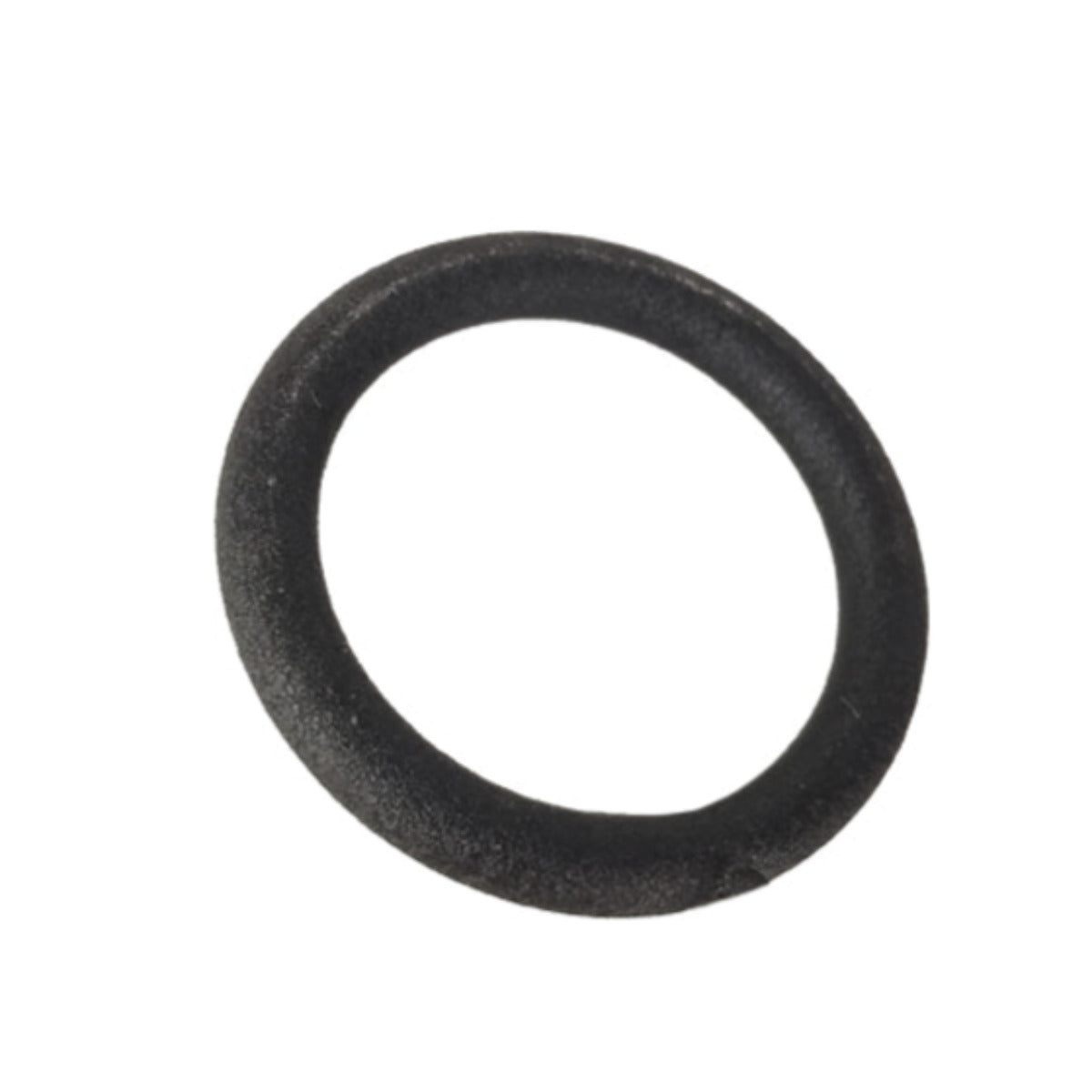
Decorative curtain rings in multiple sizes and attachment styles for creating smooth movement, controlled folds and a coordinated finished look.
Shop Drapery Rings →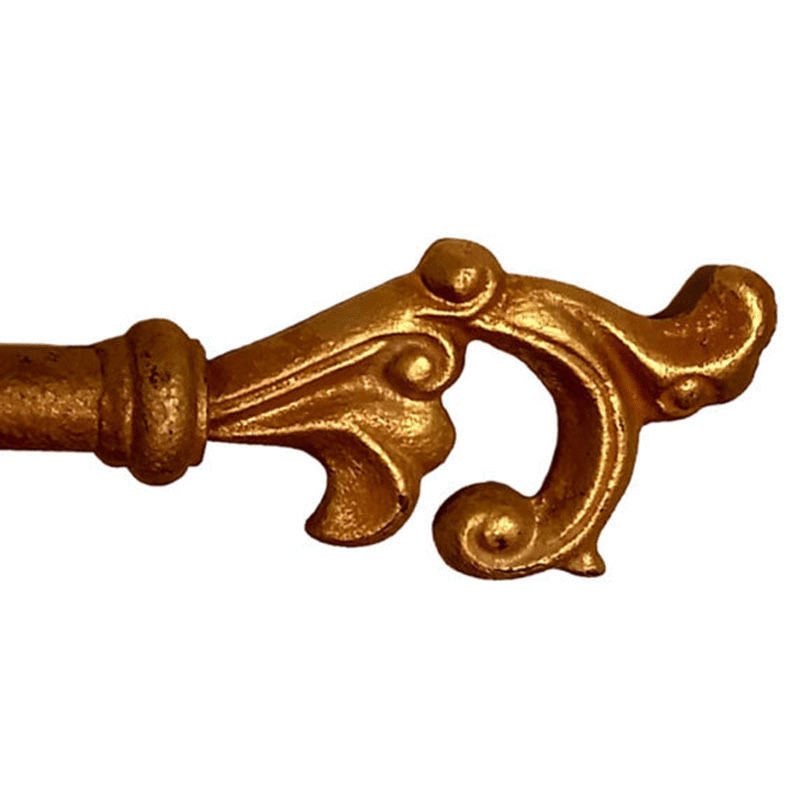
Adjustable and made-to-measure decorative curtain rods, including solutions for straight, bay, bow, corner, arch and eyebrow window configurations.
Shop Drapery Rods →
Decorative holders, medallions and tieback-style hardware for shaping swags, framing panels and drawing drapery away from the window.
Shop Scarf Holders →Drapery hardware is easiest to choose when the complete treatment is planned before ordering. Rod diameter affects bracket and ring compatibility. Bracket projection determines clearance from the wall. Fabric weight and fullness affect support, ring quantity and spacing. Window shape determines whether a standard, adjustable or custom rod makes the most sense.
Measure the wall and window configuration and note trim, blinds, shades, handles, corners, curves and ceiling conditions that affect where the rod can sit.
Consider heading style, fabric weight, fullness, finished length, stationary versus moving panels and how much room the drapery needs when stacked open.
Choose the rod configuration, compatible brackets, ring size or attachment method, decorative details and finish as one coordinated group.
Different window shapes and drapery styles call for different rod constructions. Our collection includes both flexible-size rods and custom rods made for a specific span or architectural condition.
Both can create a beautiful window treatment, but they solve different problems.
You want the rod made for a specific span, prefer a more uniform diameter, need specialty geometry such as a bay, bow, corner or arch, or expect rings to travel across much of the rod. Long custom rods may still be made in connecting sections for handling and shipping.
You want flexibility to fine-tune the width during installation and the visible telescoping seams are acceptable. Adjustable rods can work especially well with rod-pocket, tab-top or mostly stationary panels that help conceal the connections.
If drapery rings need to move across the full span: consider how the rings will pass rod joints, telescoping lips and center support brackets before choosing the rod. Special ring and bracket combinations can solve some bypass needs.
Curtain rod brackets determine more than support. They establish how far the rod sits from the wall and whether the drapery clears trim, blinds, shades and other treatments behind it.
Measure the deepest obstruction behind the drapery. Shallow projections work close to the wall, while deeper brackets create room for trim, blinds, sheers and layered treatments.
Consider the combined weight of the rod, finials, rings, fabric and lining. Wider spans and heavier treatments may require reinforced brackets and additional support points.
Wall, ceiling, inside-mount, double-rod and bypass-style brackets solve different installation needs. Choose the bracket type before finalizing rod and ring details.
Ring size and attachment style influence how curtains move along the rod and how the folds fall beneath it. Start with the rod diameter, then choose a ring with adequate inside clearance and the attachment method that suits the fabric.
The ring's inside opening must be larger than the rod so it can move freely. Oversized rings can also be used intentionally for a more dramatic decorative scale.
Eyelets, clips and specialty decorative rings create different hanging methods. Account for the drop from the rod to the top of the fabric when determining finished panel length.
Ring quantity depends on panel width, pleat count, fullness, fabric weight and the look you want. More consistent spacing creates a more controlled fold pattern.
Custom window hardware can do more than support panels. Decorative pieces can frame fabric, establish a focal point and bring sculptural detail to the wall around the window.
Architectural crowns and pediments can sit above windows, beds, doorways or other features. Depending on the style, fabric may be draped around or behind the crown, or the crown can stand alone as decorative architecture.
Scarf holders and decorative holdbacks shape fabric at the side or top of a treatment, allowing panels and swags to frame the opening while adding a visible metal detail.
Small decorative motifs can embellish cornices, fabric panels, pillows and other textile applications. Mounting style varies, so choose the accent for the surface and installation method.
There is no single mounting height or extension that works for every window. Curtain proportions, ceiling height, fabric length, fullness, trim and the amount of exposed glass you want when the panels are open all affect placement.
Decide how far the rod should extend beyond the window so opened panels have enough room to stack without covering more glass than intended. Heavy or full treatments generally need more stackback space than light, narrow panels.
Higher rod placement can visually lengthen a window, but it must be coordinated with the finished drapery length, rings or attachments and the relationship to the ceiling, trim and nearby architecture.
Measure how far trim, blinds, shades, shutters and handles project from the wall. The drapery needs enough clearance to hang and move without being pushed forward.
Bay, bow, corner, arch and eyebrow rods require additional measurements or geometry. Use the appropriate measurement guide before placing a made-to-order rod.
For custom rods, measure carefully before ordering. Many pieces in this drapery hardware line are made specifically for the measurements, finish and configuration selected, so review the individual product page and measuring guide before submitting the order.
The appeal of decorative drapery hardware is that the supporting structure does not have to disappear. Depending on the component, this collection includes iron, steel, aluminum and brass pieces that are cast, formed, welded or fabricated and then finished for the order.
Many rods and accessories are produced after the order is placed, allowing you to select dimensions, configurations and finishes appropriate to the treatment. Availability and production time vary by item.
Rods, brackets, rings and decorative details can often be ordered in coordinating finishes so the complete installation reads as one intentional hardware system rather than a collection of unrelated parts.
Custom window hardware can involve more decisions than an ordinary curtain rod. These guides go deeper into the measurements, clearances and component choices.
If your project includes other visible ironwork, these related hardware collections can carry the same sense of structure and handcrafted detail through the room.
Our custom drapery hardware collections include decorative curtain rods, brackets, drapery rings, decorative accents, architectural drapery crowns and scarf holders or curtain holdbacks. Individual components can often be coordinated by finish and configuration.
An adjustable rod uses overlapping telescoping sections so its finished width can be changed within a stated range. A custom rod is made for a specified span and maintains a more consistent diameter through its connected sections. Custom rods are also available for specialty window shapes such as bay, bow, corner, arch and eyebrow windows.
Yes. The custom drapery rod collection includes rods for bay windows, curved bow windows and 90-degree corners, as well as custom arch and eyebrow window rods. Each specialty configuration has its own measuring requirements.
Measure the deepest obstruction behind the curtain, including trim, blinds, shades, shutters and handles. The bracket must hold the rod far enough from the wall for the fabric to hang and move freely. Also consider layered treatments, rod diameter, fabric weight and the leverage created by deeper projections.
Quantity depends on panel width, pleat count, fullness and fabric weight. A common starting point is approximately seven rings for every 48–54 inches of fabric width, while pleated panels are often planned around one ring per pleat. See the Drapery Ring Guide for more detailed spacing information.
Standard closed rings generally cannot pass an ordinary center support. If the treatment needs to travel across support points, plan the rod, bracket and ring style together and consider compatible bypass-style hardware designed for that use.
Both are decorative pieces used to shape fabric. Holdbacks typically pull curtain panels to the sides of the window, while scarf holders can support swags or scarf valances at the sides or above the opening. Some designs can serve either purpose.
A drapery crown is a sculptural architectural accent mounted above a window or other feature. Fabric can be draped around, beneath or behind some crown styles, while others can be used as decorative architecture on their own.
Many items in the collection are made or hand-finished after the order is placed, and custom rods are produced for the selected dimensions and configuration. Production time, finish options and customization vary by product.
Return and cancellation eligibility can differ from standard stocked merchandise because many pieces are made specifically for the order. Review the individual product page and current Iron Accents return policy before ordering custom hardware.
The required measurements depend on the rod type. Straight, bay, bow, corner, arch and eyebrow rods do not all use the same measuring method. Use the measuring guide for the exact rod you are ordering and contact Iron Accents before placing the order if any dimension or installation condition is uncertain.