Your Cart is Empty
































Seat-to-Surface Clearance
A useful starting point is approximately 10–13 inches between the usable seated surface and the lowest point beneath the counter, apron or bar.

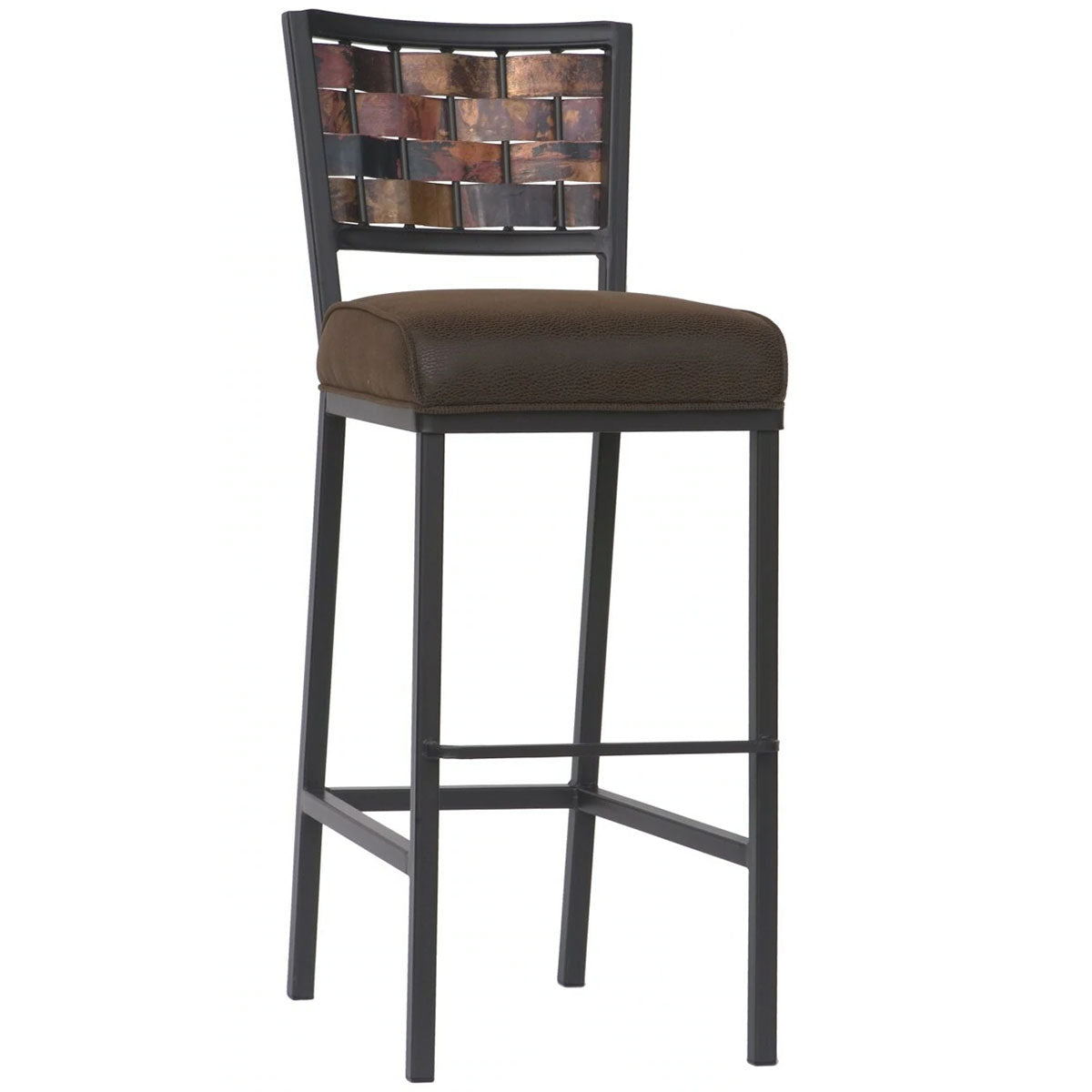
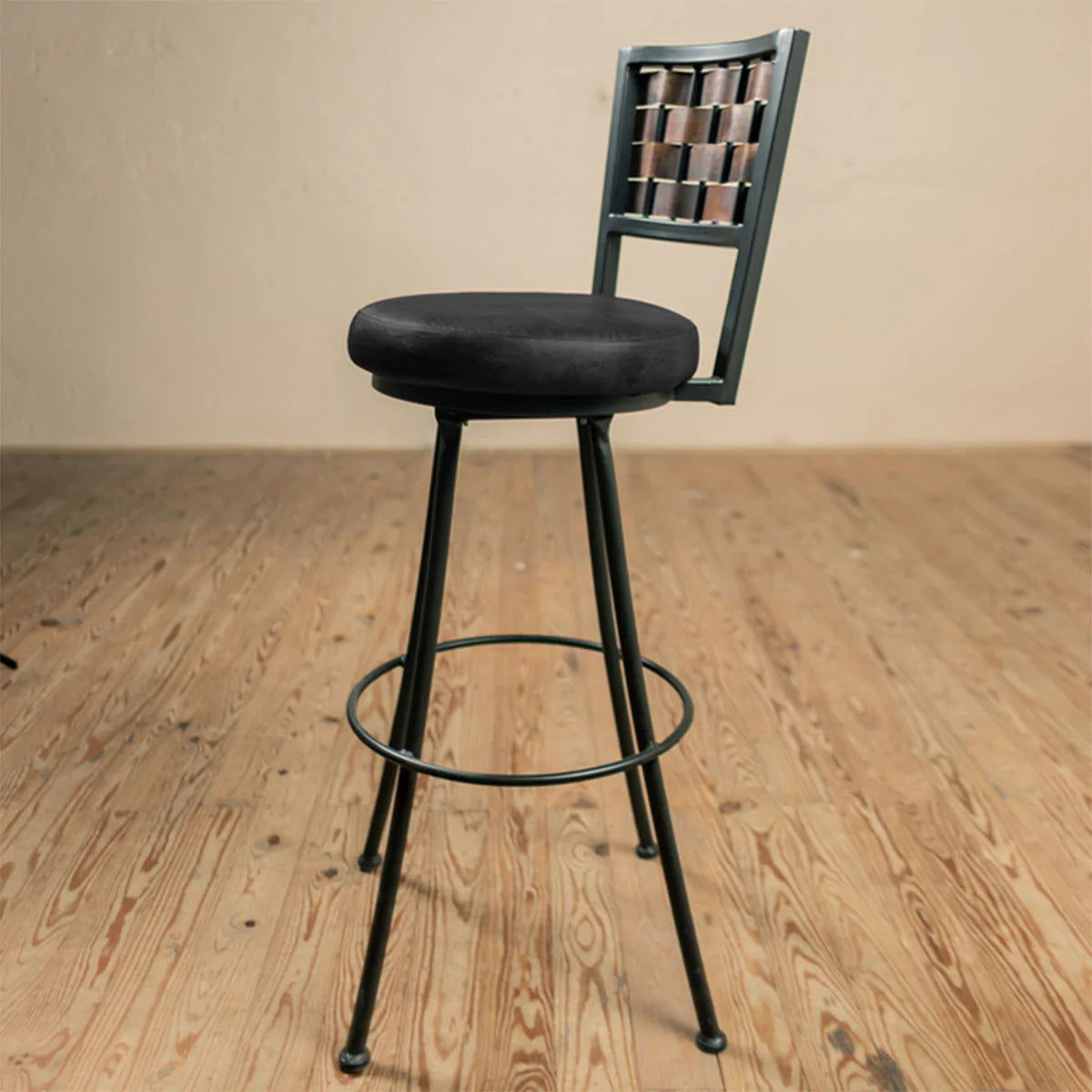
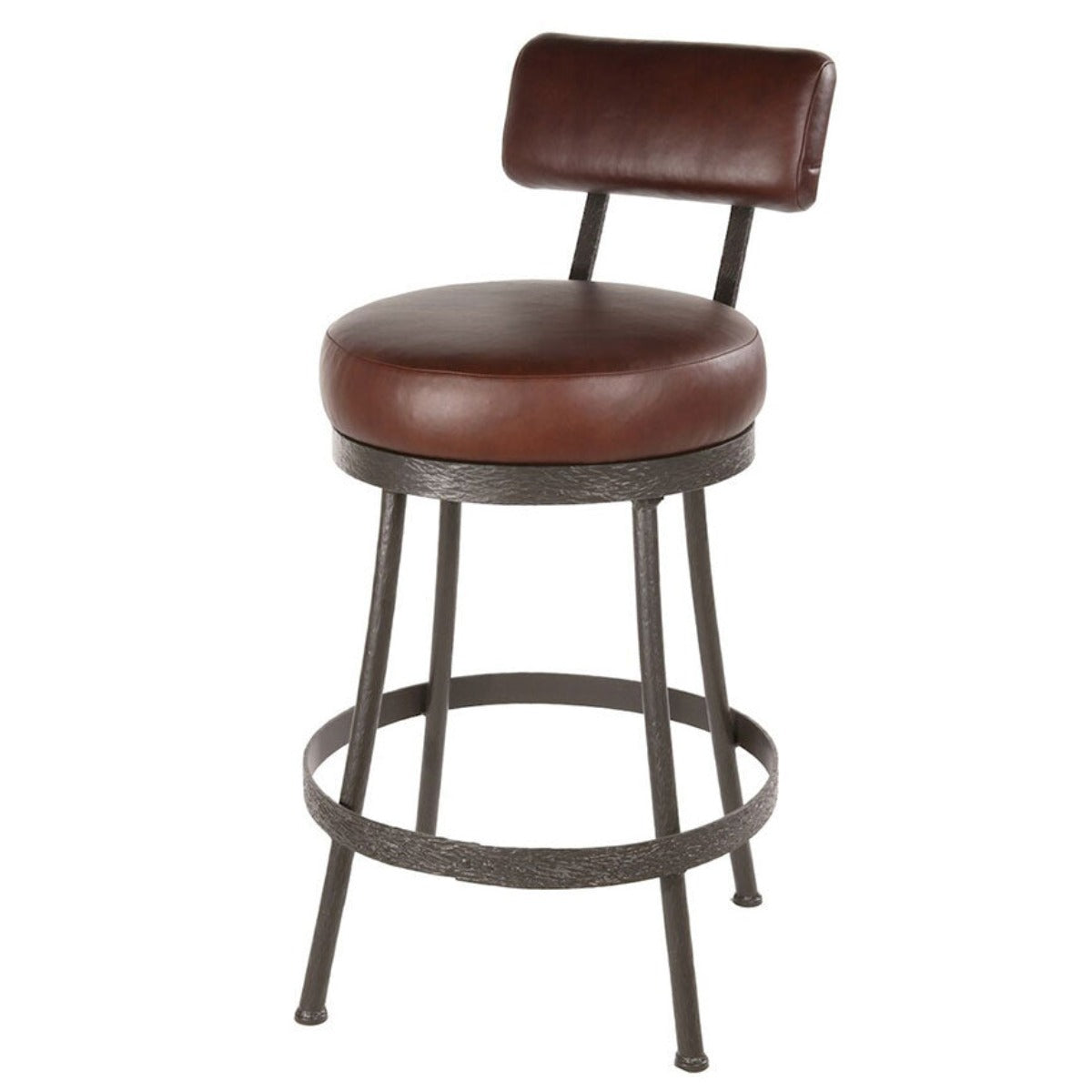
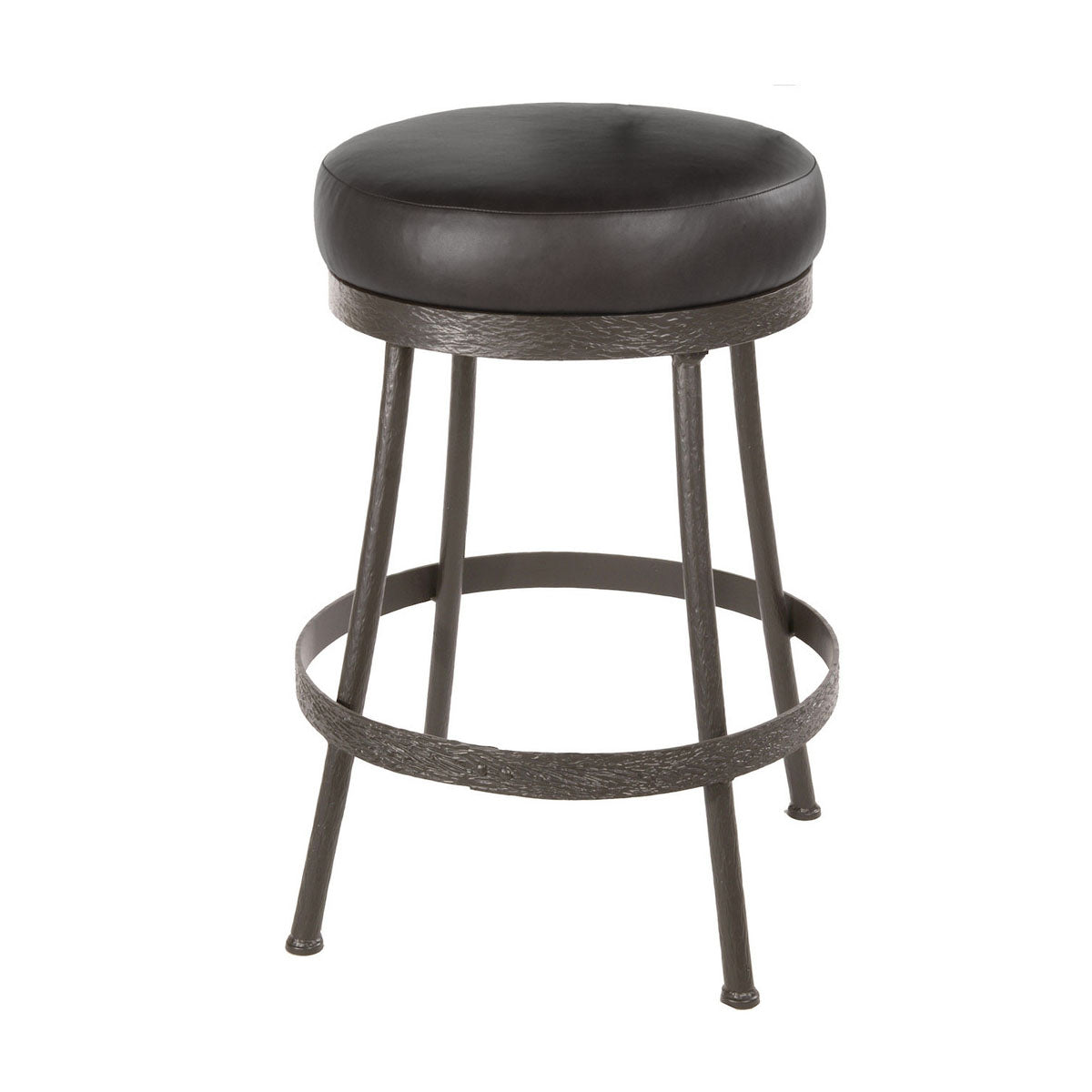
Bar & Counter Stools
Some of the best moments in a home happen around the counter—morning coffee at the kitchen island, homework while dinner simmers, or friends gathered around the bar long after the evening begins.
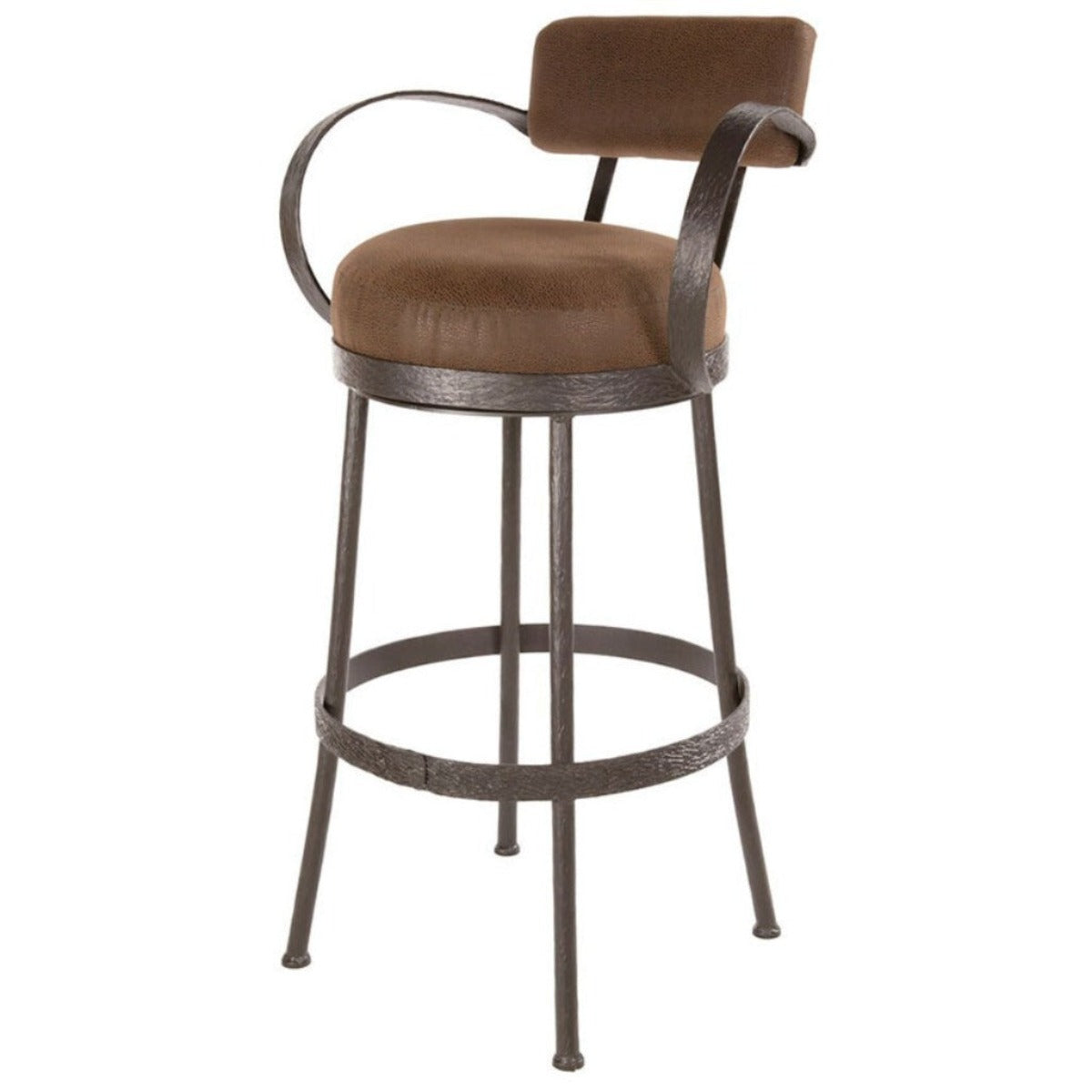
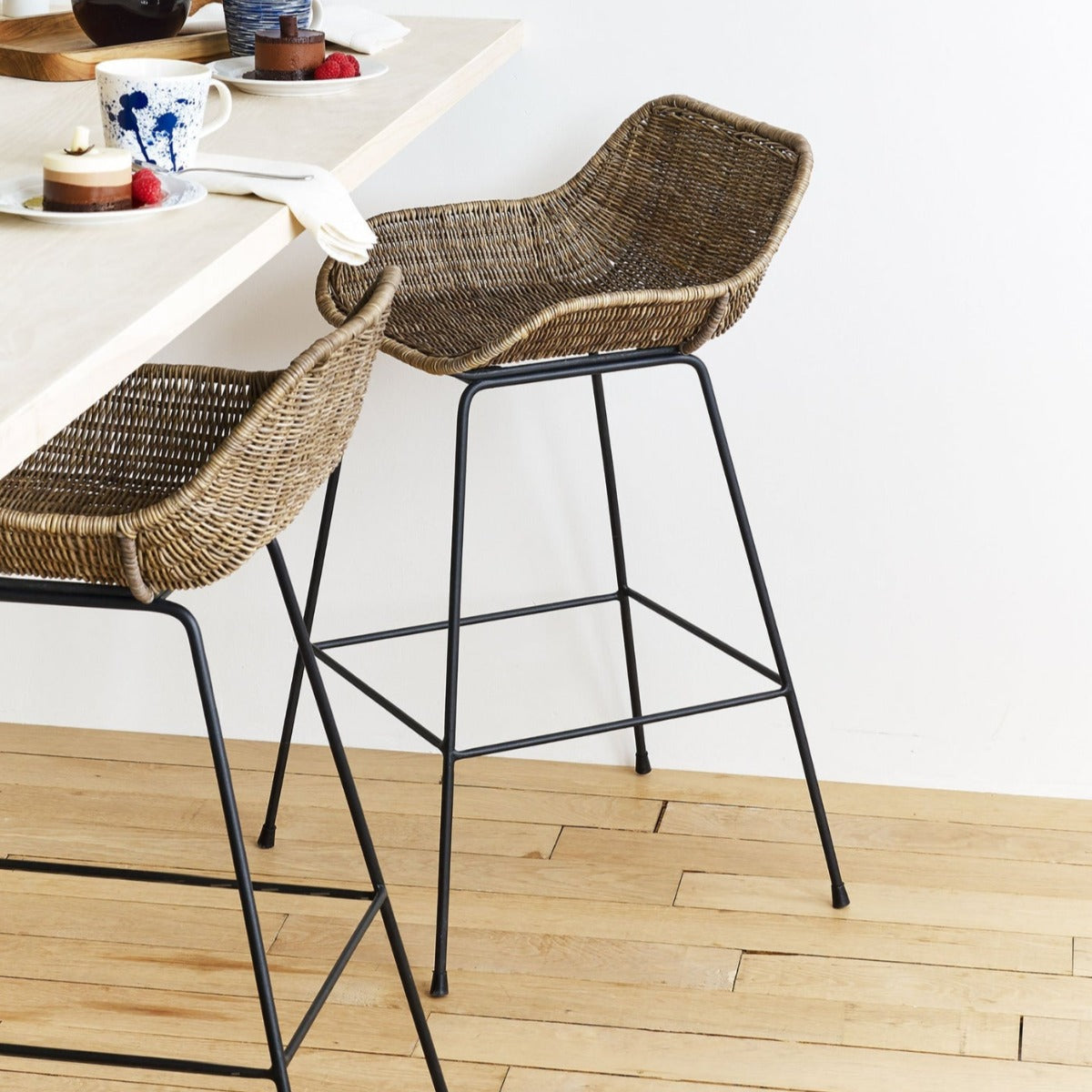
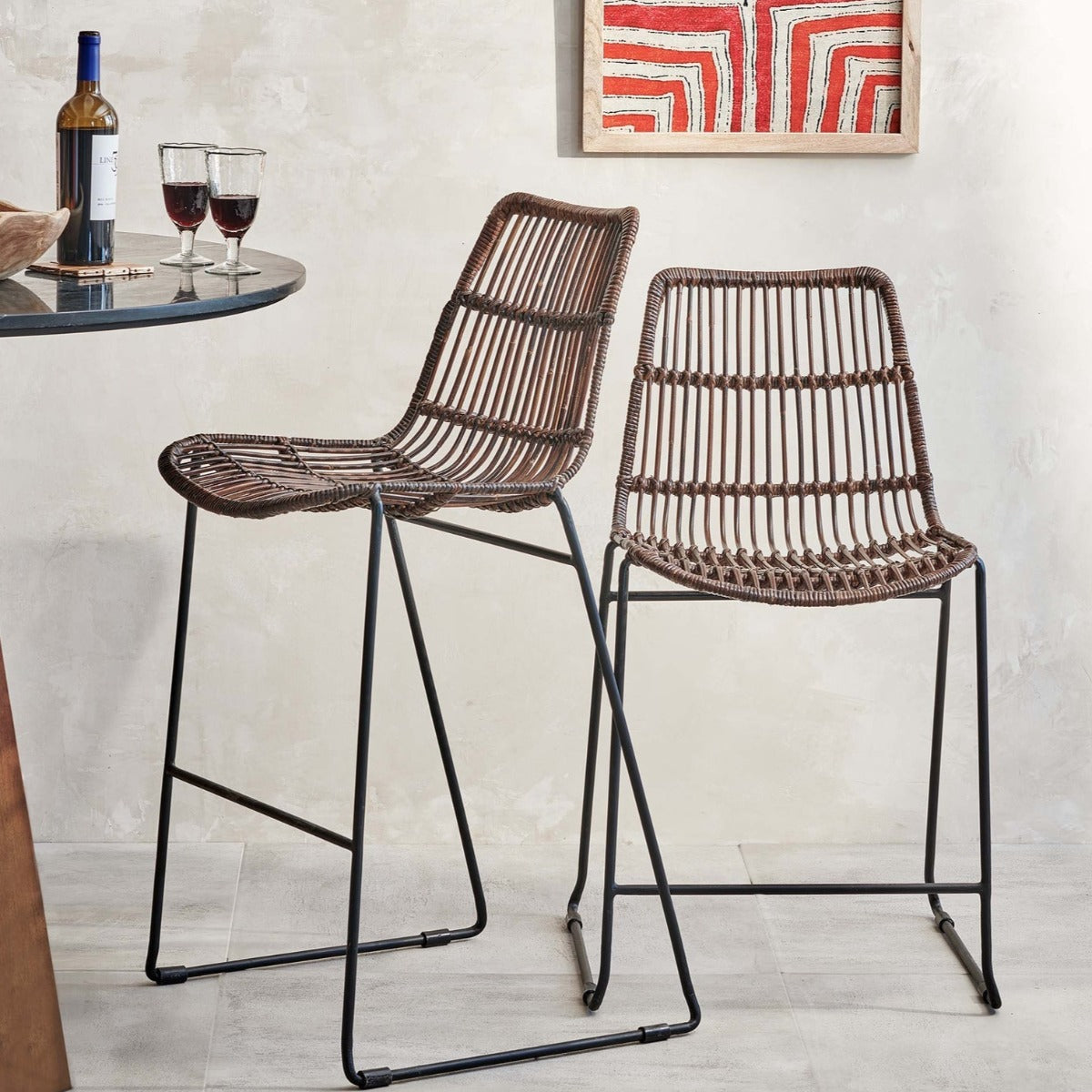
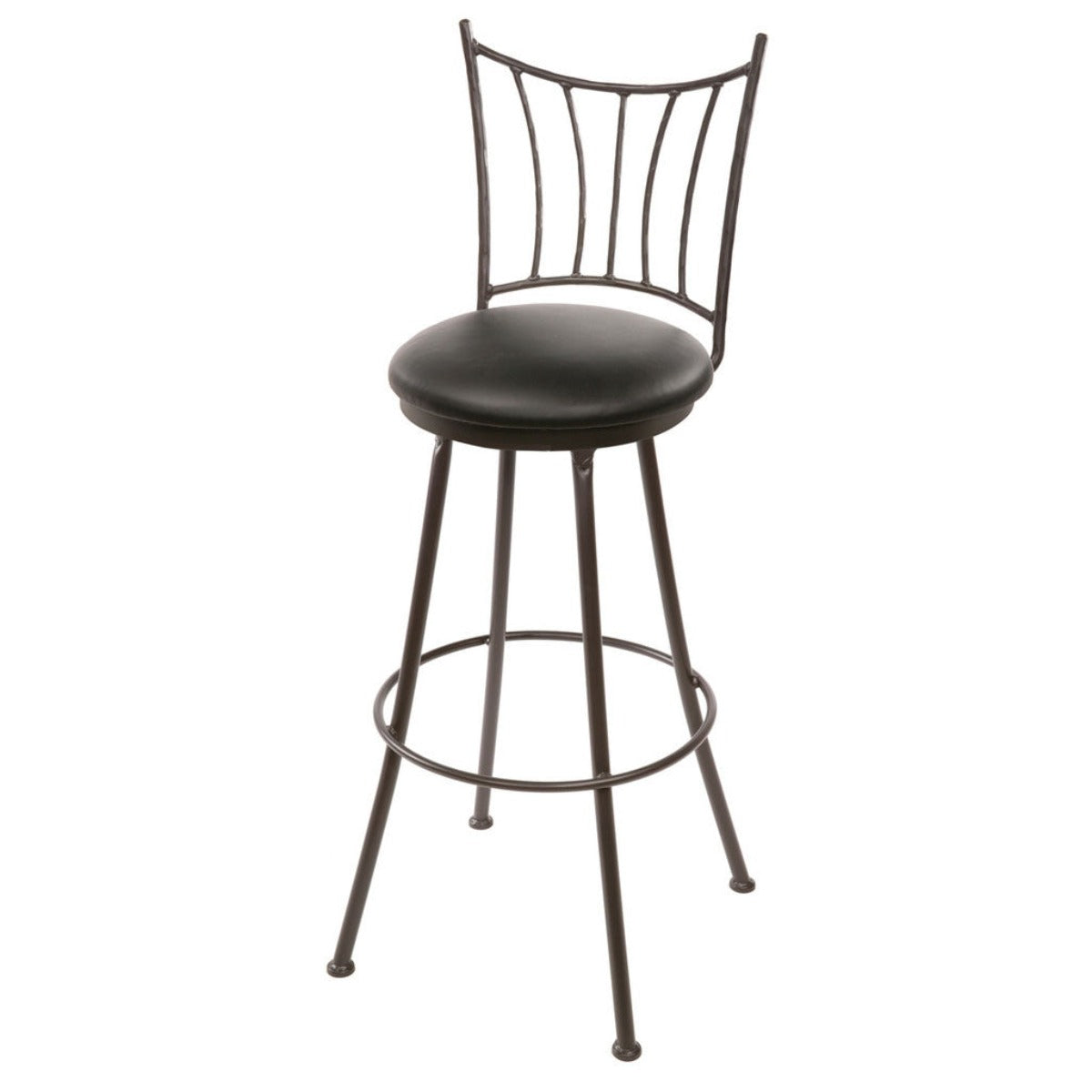
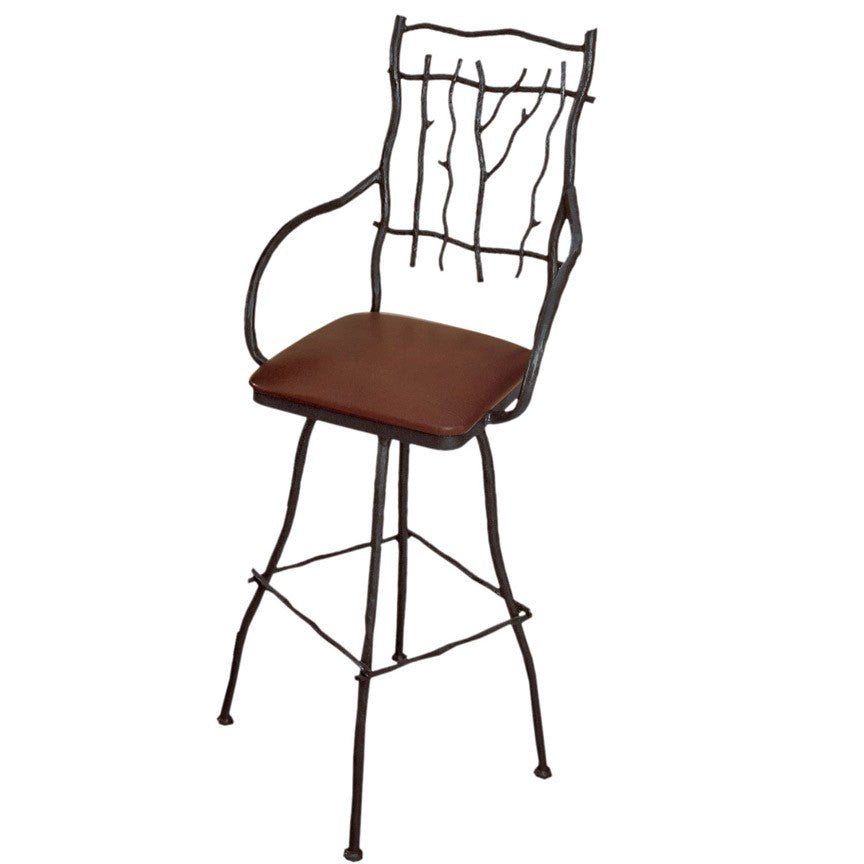
Our collection brings together handcrafted iron stools, warm wood, leather, upholstery, cane and woven textures in designs made to feel sturdy, comfortable and full of character. Pull up a seat and stay awhile.
Before ordering: measure from the finished floor to the lowest point beneath the counter or bar, including aprons, rails and decorative edges—not only to the top surface.
Pull Up a Seat
Bar and counter stools turn a work surface into a gathering place. They invite someone to sit nearby while dinner is prepared, create an easy spot for breakfast and give guests a natural place to settle without separating themselves from the rest of the room.
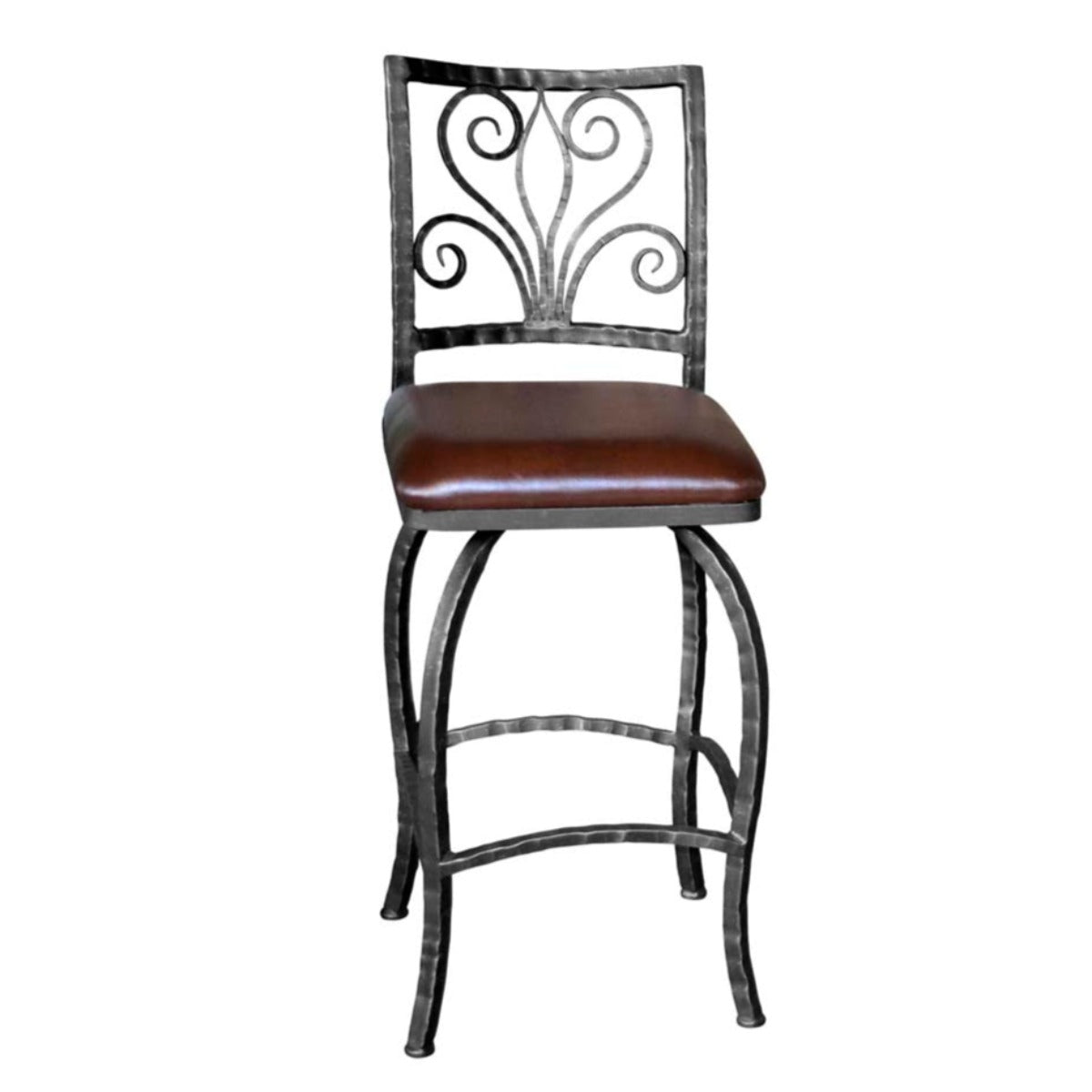
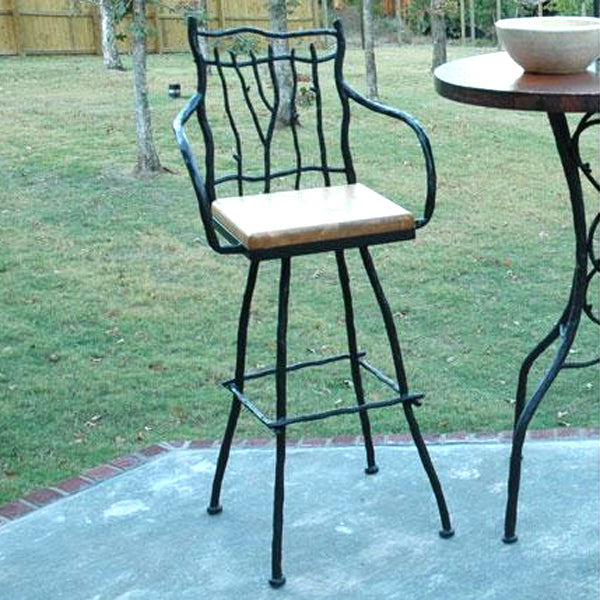
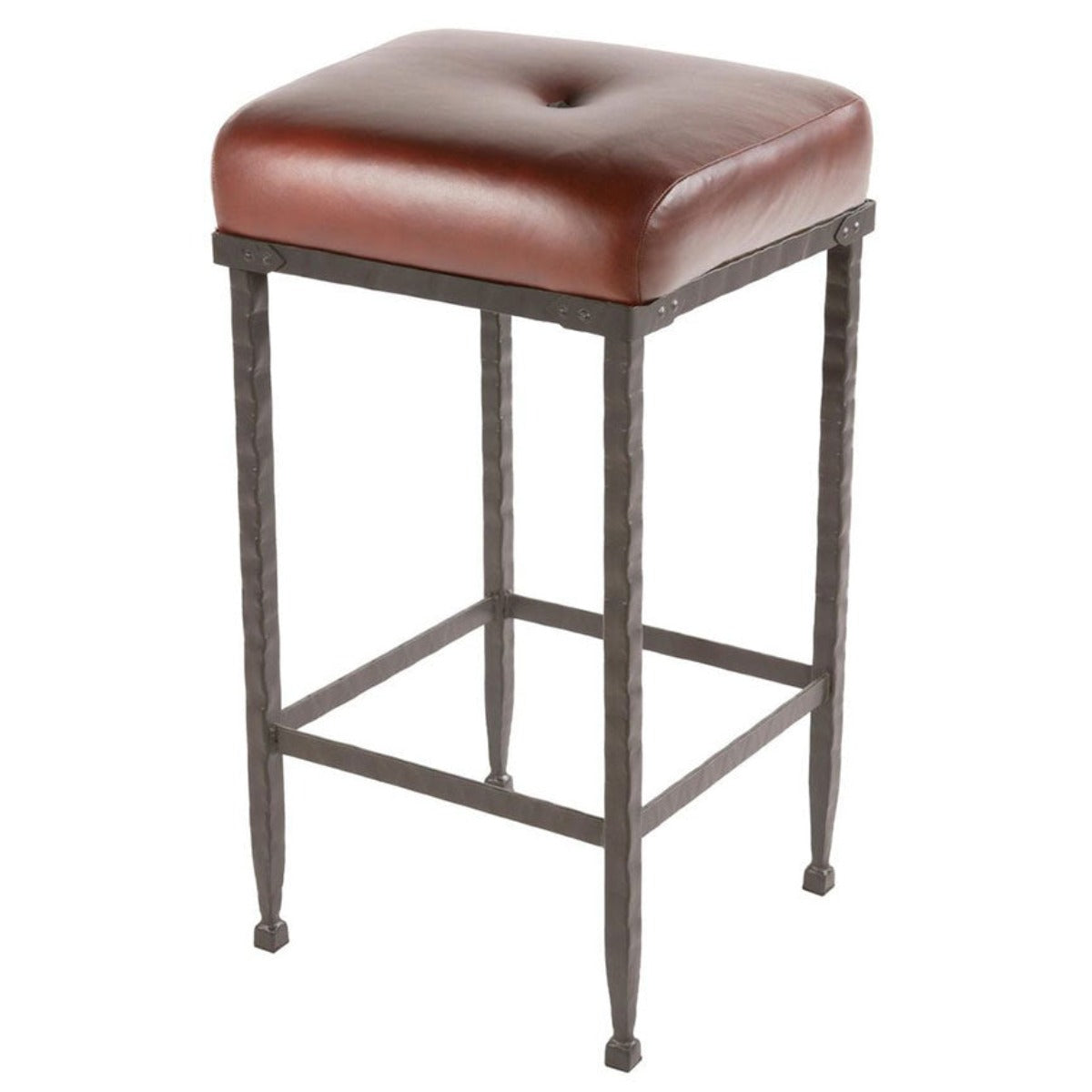
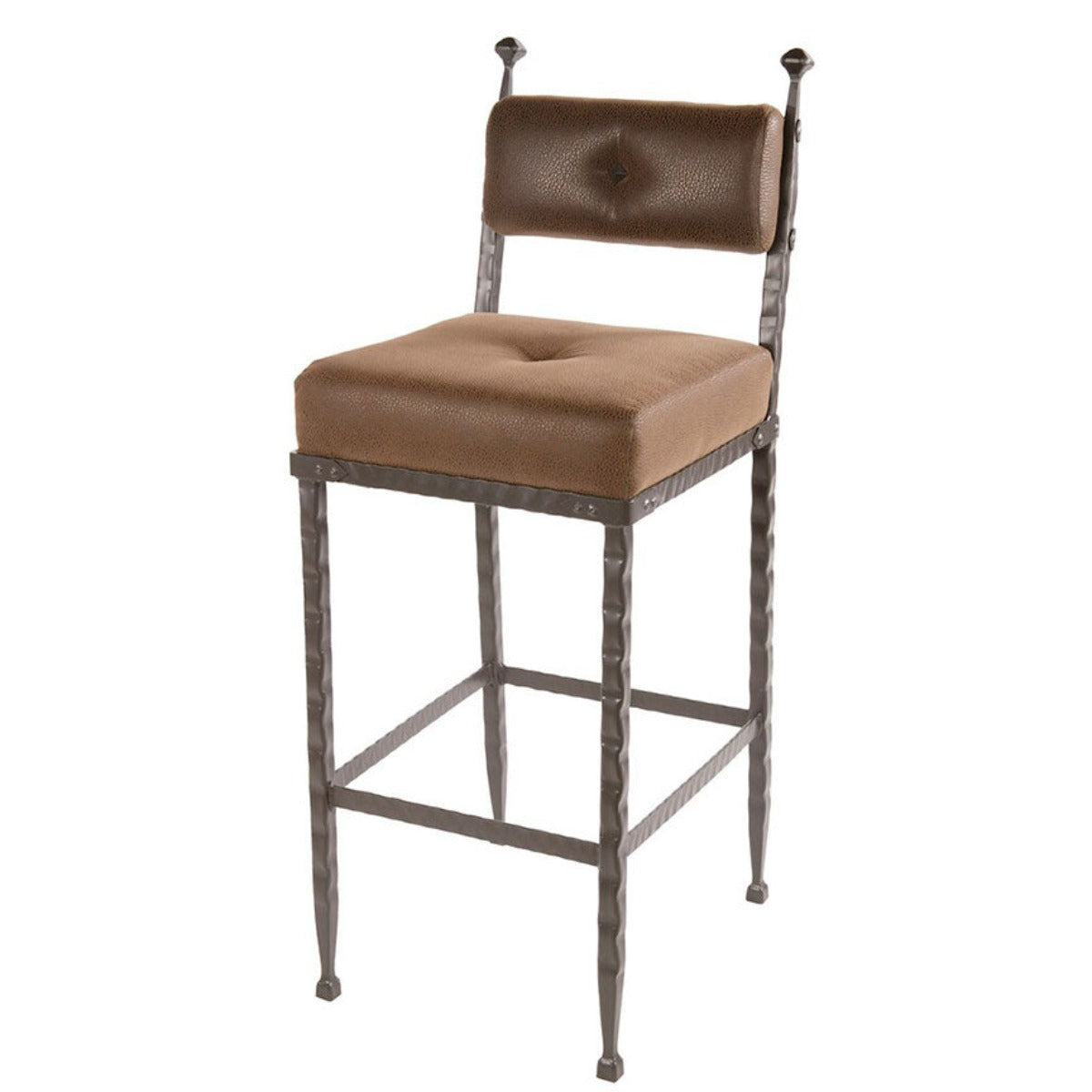
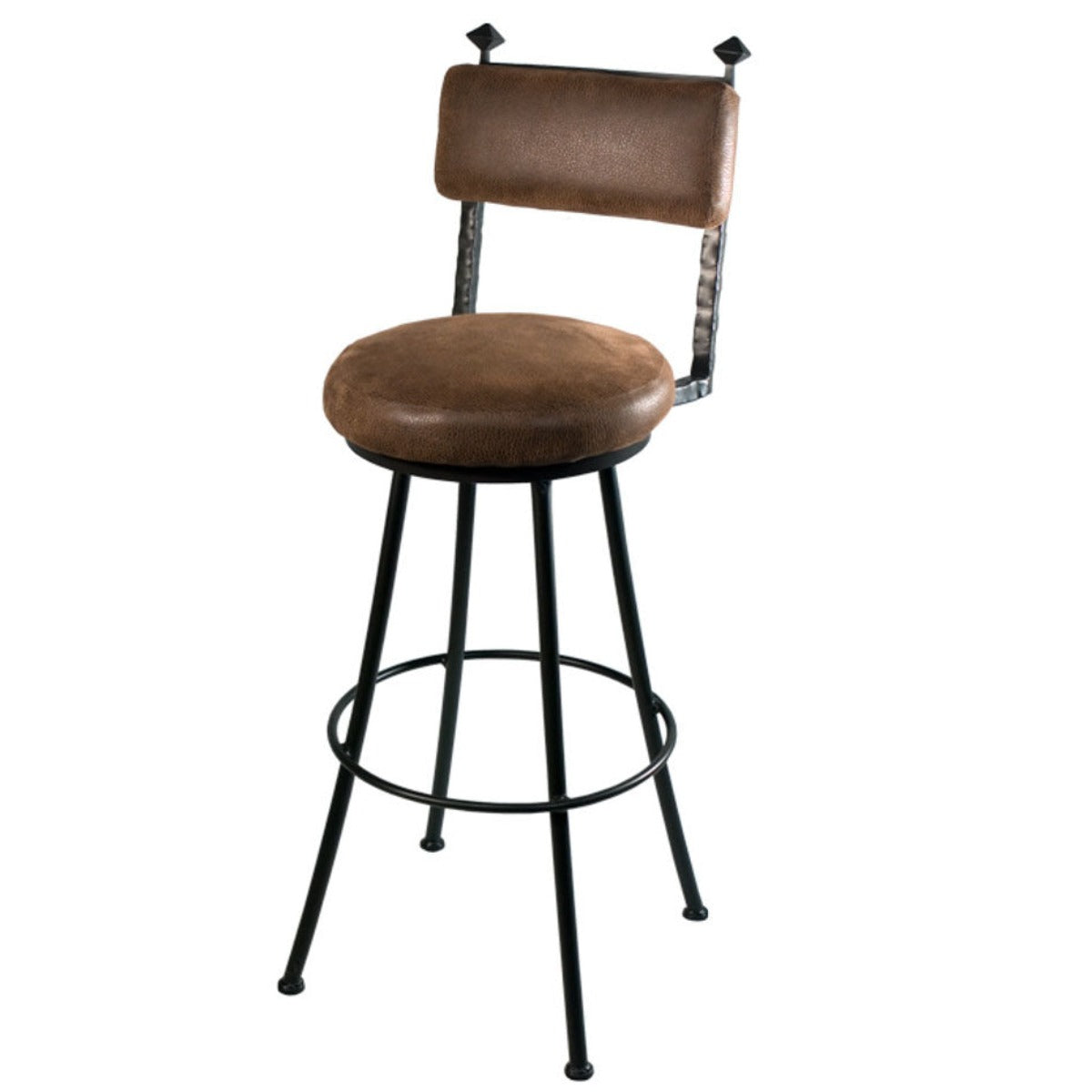
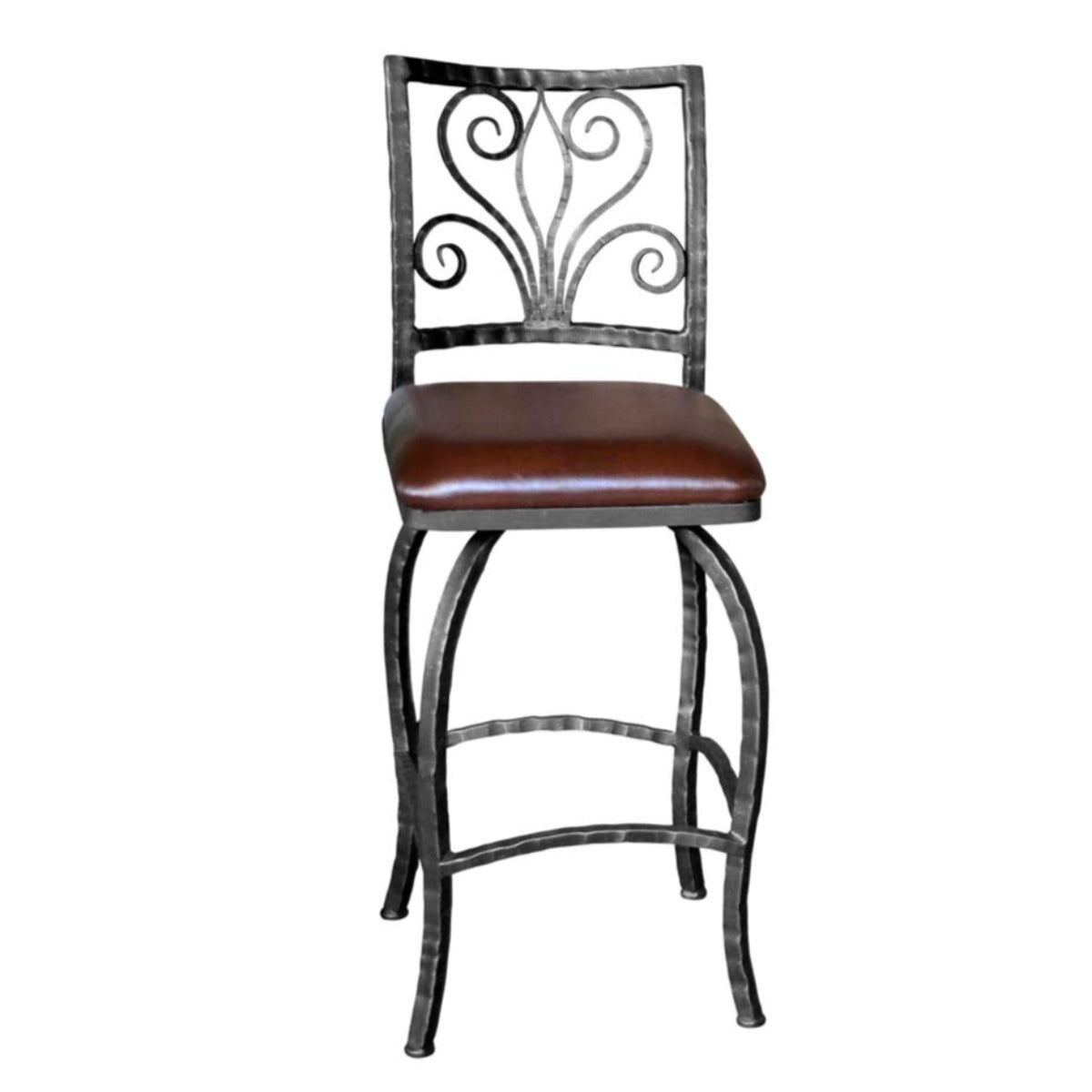
Hand-forged backs, hammered frames, curved legs and artisan finishes bring the strength and character of iron into these everyday spaces. Wood, leather, upholstery, cane and woven seats add warmth and make the stool feel connected to the way the room is actually lived in.
Measure Before You Choose
Stool names are useful, but counters and bars are not always built to standard dimensions. Let the actual measurements make the final decision.
A useful starting point is approximately 10–13 inches between the usable seated surface and the lowest point beneath the counter, apron or bar.
Allow at least about 24 inches for compact backless stools, 26–30 inches for many backed styles and 30 inches or more for wide, upholstered or armed stools.
Include the stool’s full depth and room to pull out or swivel. Approximately 30–36 inches is more comfortable, with additional clearance where people regularly walk behind occupied stools.
Bar & Counter Stool Buying Guide
Compare counter and bar heights, usable seating width, backs, arms, swivel movement, footrests, materials, floor protection and the clearance needed behind each stool.
Choose How the Stool Lives in the Room
Each style changes not only comfort, but also how much visual and physical space the stool occupies around the island or bar.
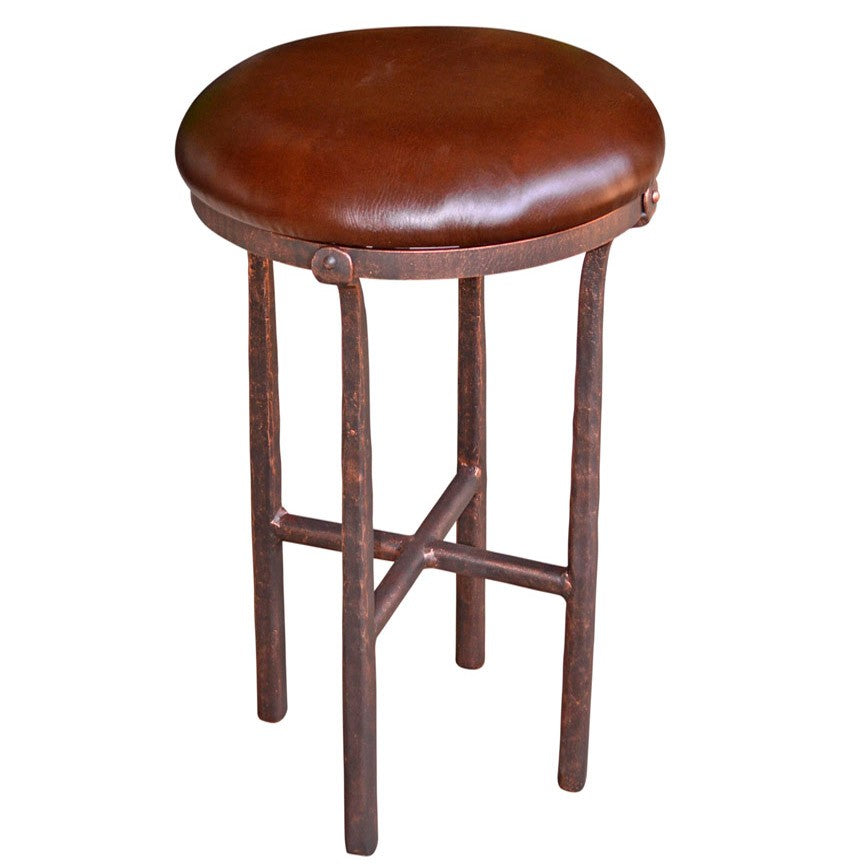
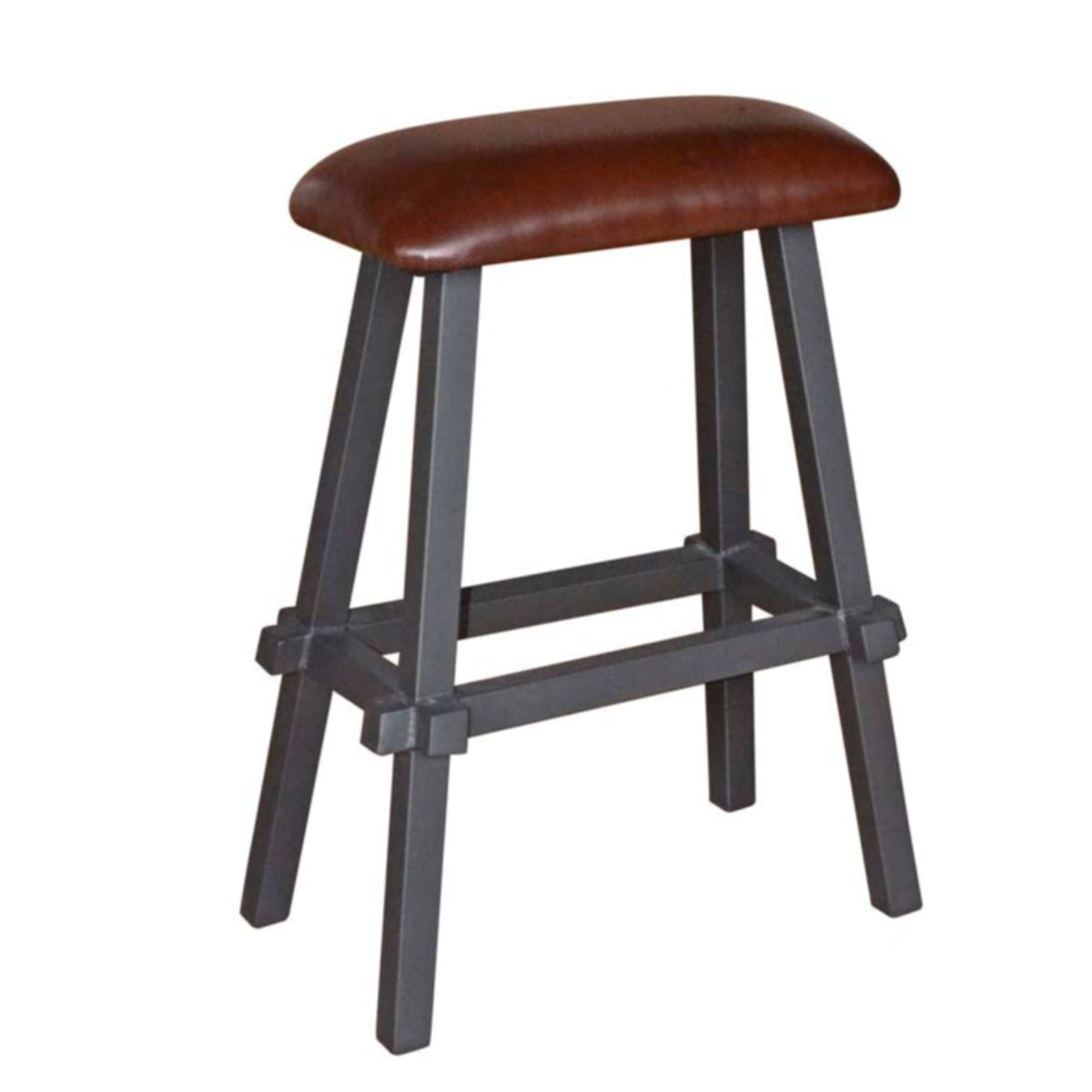
Backless stools tuck neatly beneath an overhang and preserve open sight lines. Armless frames are easier to place side by side and allow guests to enter from either direction.
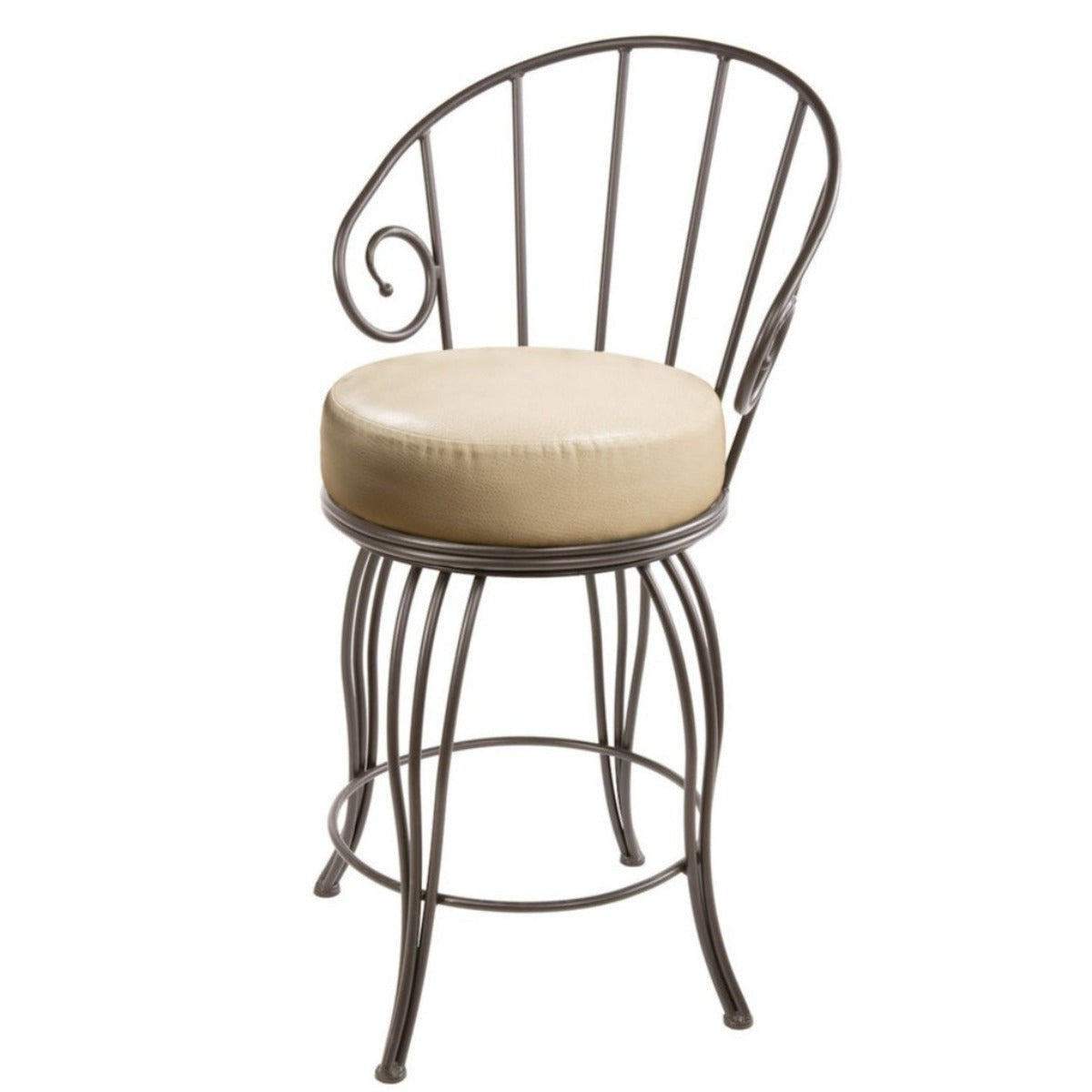
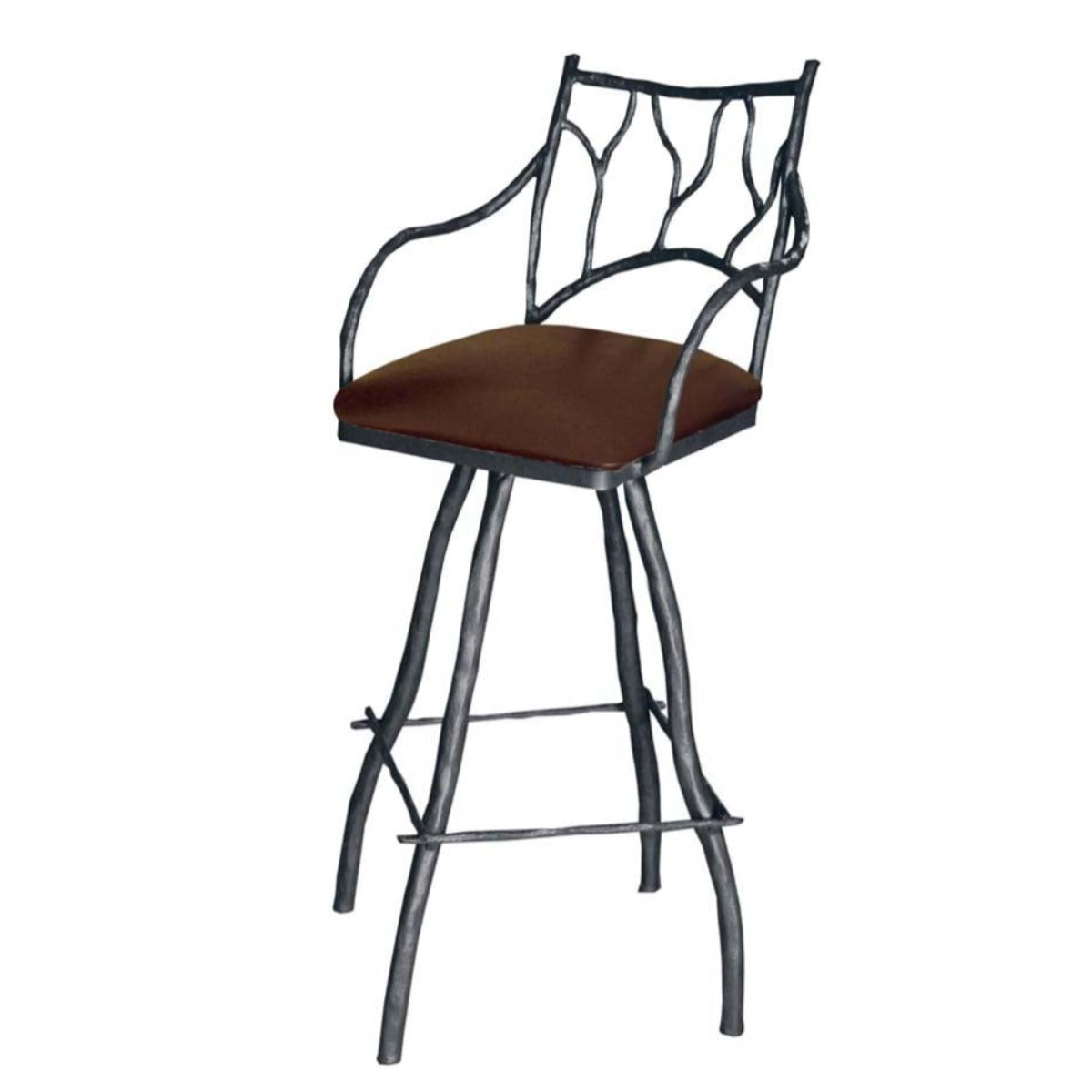
A supportive back makes longer meals and conversation more comfortable. Arms create a substantial, chair-like seat but add width and may prevent the stool from sliding fully beneath the counter.
Swivel seats make it easier to turn toward the room without dragging the stool. Adjustable designs add flexibility, but both styles need room to move and may require occasional hardware checks.
Handcrafted Details Matter
Iron creates a strong architectural frame that can be shaped into clean lines, graceful scrollwork, floral backs or richly hammered silhouettes. A well-placed footrest supports the legs and makes the elevated seat feel far more comfortable.
Wood seats add warmth and are generally easy to maintain. Leather develops character with age, while upholstery introduces softness, color and pattern. Cane and woven materials bring a lighter café or bistro feeling to the collection.
Many iron stools are handcrafted after purchase and may offer a choice of counter or bar height, finish, seat material, upholstery or limited customization. Other designs are stocked in the exact finish and configuration shown.
Product pages identify the overall dimensions, seat height, width, materials, available options, current production time, minimum order quantities, shipping method and return eligibility.
Differences in ironwork, welds, patina, wood grain, leather, cane, upholstery and hand-applied finishes are part of the individual character of artisan-made furniture.
Common Questions
Counter stools commonly have seats around 24–26 inches high and are paired with surfaces around 35–36 inches. Bar stools commonly have seats around 28–31 inches and are paired with surfaces around 40–42 inches. Always verify the exact measurements.
Measure from the finished floor to the lowest point beneath the counter, including aprons, rails and thick edges. Subtracting about 10–13 inches gives a useful target range for the seated height.
Use the usable counter length after excluding cabinets, corbels, sinks and blocked areas. Allow at least about 24 inches for compact stools and more for wide backs, arms, swivel movement or generous upholstery.
Stools with backs generally offer more support for longer periods of sitting. Backless stools save space, tuck beneath the counter and keep the room visually open. The better choice depends on how long the stools will be used and how much room is available.
Measure the highest point of the arms and compare it with the floor-to-underside clearance. A stool can have the correct seat height but still sit too far from the counter if its arms do not fit beneath it.
Swivel stools make it easier to turn and enter without moving the full frame, but they need clearance from neighboring stools and counter edges. Stationary stools feel simple and steady but may need to be pulled farther out to enter.
Wood and metal are generally straightforward to clean, while leather develops warmth and character over time. Upholstery adds softness and color but should be selected with stain resistance, children, pets and daily use in mind.
It varies by product. Some stools are available for quicker shipment, while others are made to order. Certain freight-shipped designs may have a minimum quantity. Review production time, quantity requirements and return eligibility before ordering.
Continue Shopping