Your Cart is Empty





For Resting Your Feet
Compare the ottoman or footstool height with the chair seat and consider how far it will sit from the chair. A lower profile often feels relaxed, while a taller piece changes the leg angle.


Ottomans & Accent Stools
A compact piece can make everyday living more comfortable, more useful and a little more interesting—whether it becomes a footrest, movable perch, plant stand, display riser or decorative accent.
This collection brings together a natural-fiber ottoman, hand-hooked footstools, rustic wood stools and imaginative display pieces. Each has its own intended use, so the individual product details matter.
Before ordering: confirm whether the piece is intended for seating, use as a footrest, stepping or decorative display. Do not sit or stand on a product unless the individual listing supports that use.
A Little Piece That Earns Its Place
Ottomans and low footstools invite you to settle in, while compact stools can bring an extra surface, a touch of color or a useful perch to corners that cannot accommodate larger furniture.
These pieces are especially appealing because they are easy to move and easy to layer into an existing room. A hooked stool can brighten a reading corner, a natural-fiber ottoman can soften a chair, and a rustic wood stool can add height and texture to a collected display.
Choose by Purpose First
Begin with the intended use, then compare the height, footprint, materials, weight, construction and care requirements of the design.
Compare the ottoman or footstool height with the chair seat and consider how far it will sit from the chair. A lower profile often feels relaxed, while a taller piece changes the leg angle.
Confirm that the listing identifies the stool as seating or a perch. Check the seat dimensions, stability, construction and any stated weight or use limitations before sitting.
Only a product specifically described as a step stool should be used for reaching higher places. Decorative risers, plant stands and display stools should never be treated as ladders.
Small-Piece Planning Checklist
Check the complete width, depth and height, then consider floor clearance, nearby furniture, stability, materials, care, assembly and whether the product is approved for seating or stepping.
Texture Makes the Difference
Small furniture offers an easy way to introduce a material or pattern that might feel too strong on a larger piece.
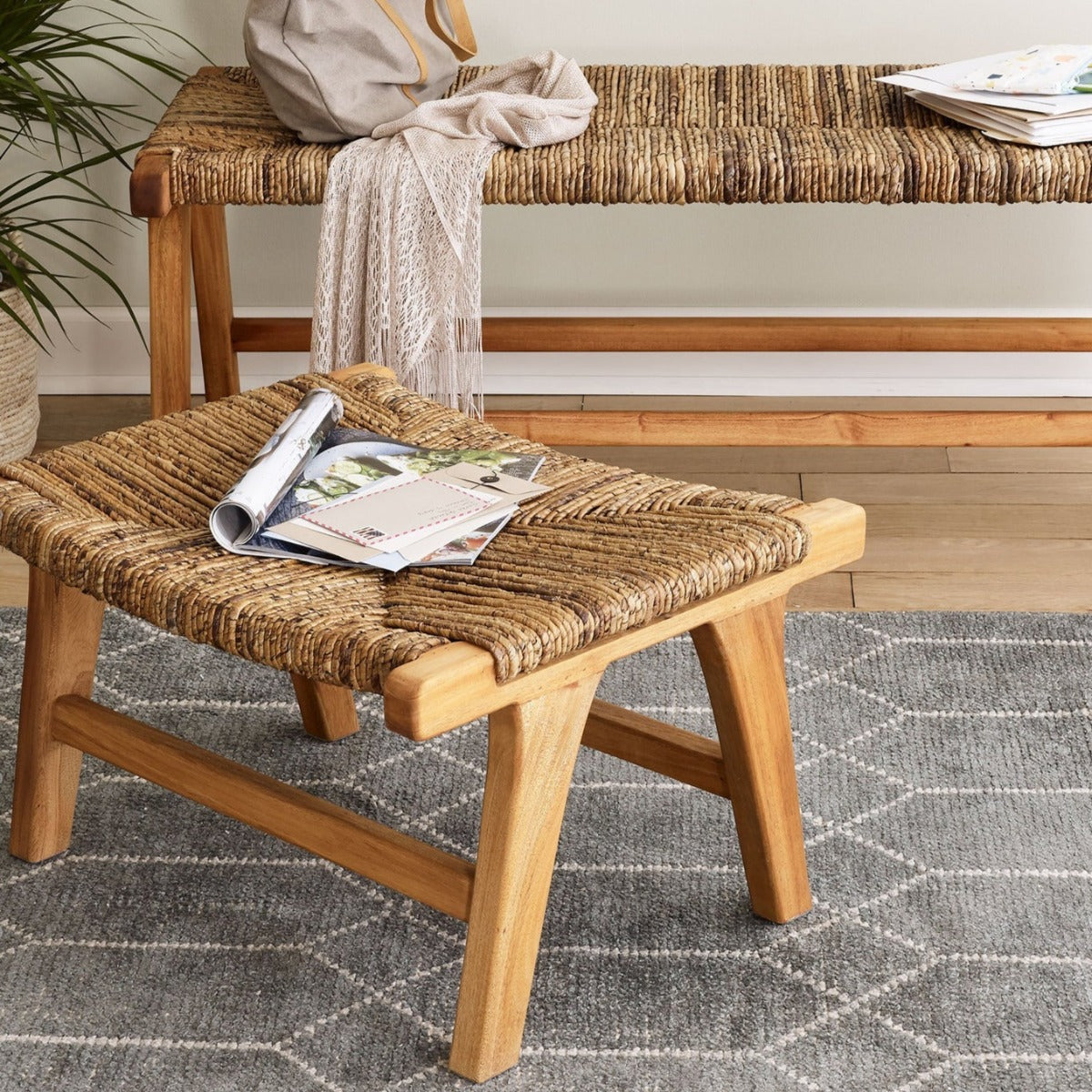
Woven banana bark brings organic color and texture, with natural variation ranging from lighter honey tones to deeper browns. Gentle dusting and careful moisture control help preserve the fibers.
Hooked surfaces introduce pattern, softness and playful character. Variations in color and pattern placement are part of the handcrafted appearance. Follow the listed spot-cleaning instructions.
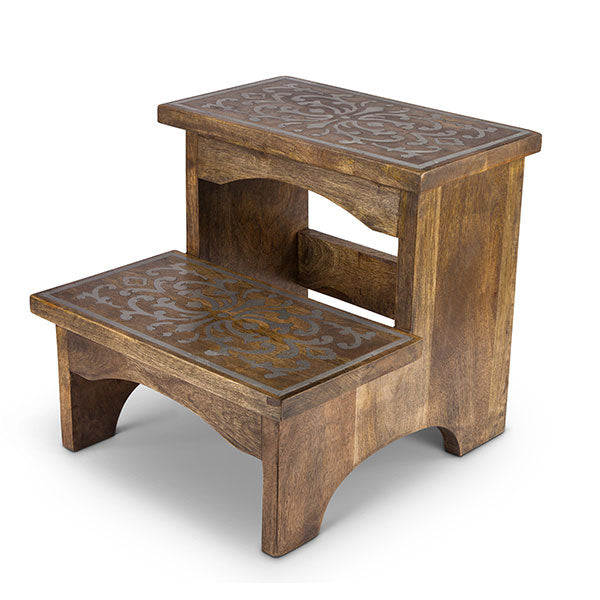
Turned legs, weathered finishes and metal inlay give wooden stools an heirloom-inspired quality. Natural grain, distressing and hand-applied finishes will vary from piece to piece.
Easy to Move, Easy to Layer
Place a footstool near a reading chair, tuck a hooked stool beneath a console, or move an approved accent seat into a conversation area when an extra perch is useful.
A stable stool may also work as a plant stand or small display surface when the product description permits it. Use a protective tray or barrier when moisture, soil or drinks could damage the finish.
Decorative risers add height to greenery, lanterns, books or seasonal objects but may not be engineered for sitting or standing. A product that looks like a stool should not be assumed to perform every stool-like use.
Product pages identify the dimensions, materials, approved uses, assembly, delivery timing, current availability and return eligibility.
Differences in yarn color, pattern placement, banana bark, wood grain, distressing, carving and hand-applied finishes are part of the individual character of applicable designs.
Common Questions
An ottoman is usually a padded or woven piece used with seating, often as a footrest or occasional surface. A footstool is generally smaller and intended primarily to support the feet. Accent stool is a broader term that may describe seating, a decorative perch, a plant stand, display riser or another compact furniture form.
No. Some products are described as seating or an occasional perch, while others are intended as footrests, plant stands, display risers or decorative accents. Follow the stated use on the individual product page.
No. Only use a product for stepping when it is specifically identified and constructed as a step stool. Never stand on an ottoman, hooked footstool, decorative riser or accent stool that is not approved for that purpose.
Comfort depends on the chair seat height, the user and the desired leg angle. Compare the exact ottoman or footstool height with the chair you plan to use rather than relying on one universal measurement.
Some stable designs can hold a tray, books, greenery or decorative objects when the product description permits it. Protect fabric, yarn, natural fibers and wood from heat, moisture and spills, and do not exceed the intended use or weight capacity.
Only when the individual listing allows outdoor or protected covered-area use. Most hooked yarn, indoor wood and natural-fiber pieces should be protected from rain, direct weather and prolonged moisture.
Assembly varies. Some pieces arrive fully assembled, while hooked stools or benches may require simple leg attachment. Review the individual listing for assembly and delivery information.
Yes. Natural fibers, hand-hooked yarn, wood grain, distressing, carving and hand-applied finishes can vary. These differences are part of the character of the materials and handcrafted processes.
Continue Shopping