Your Cart is Empty












Seat-to-Table Clearance
A common starting point is approximately 10–13 inches between the top of the occupied seat and the underside of the tabletop, apron or lowest structural obstruction.


Dining Chairs
Every memorable meal begins with a place to sit. Around the table, conversations linger, laughter carries and everyday dinners become part of the traditions that make a house feel like home.
Our collection brings together handcrafted iron, warm wood, woven textures and inviting upholstery—chairs chosen to complement the table while encouraging everyone to stay a little longer.
Before ordering: compare the chair’s seat height, overall width, arm height and back height with the table, apron, base placement and room clearance.
Comfort Around the Table
Dining chairs become part of the rhythm of the home. They are pulled close for weekday breakfasts, spread around the table when family arrives and carried into another room when an extra seat is needed. Comfort matters because these are not pieces meant only to be admired.
The right chair supports the body, fits naturally beneath the table and brings another layer of line, texture and warmth to the room. Open iron backs keep the setting feeling light, wood adds natural character and upholstery softens the experience of a long meal.
Measure for a Comfortable Fit
A chair may have the right seat height but still be too wide for the usable table edge, blocked by a leg or pedestal, or unable to slide beneath a deep apron.
A common starting point is approximately 10–13 inches between the top of the occupied seat and the underside of the tabletop, apron or lowest structural obstruction.
Many side chairs need about 24 inches of usable table edge, while wider backs, arms or generous upholstery may require closer to 28–30 inches per guest.
Measure from the table edge rather than the tucked chair. Around 36 inches is a useful comfortable starting point, with more room needed where people regularly walk behind seated guests.
Dining Chair Buying Guide
Learn how to compare seat height, chair width, arm clearance, table capacity, back support, materials, room spacing and the placement of table legs and pedestals.
Material Changes the Feeling
Dining chairs can repeat the materials already in the room or introduce the contrast that keeps a table setting from feeling overly matched.
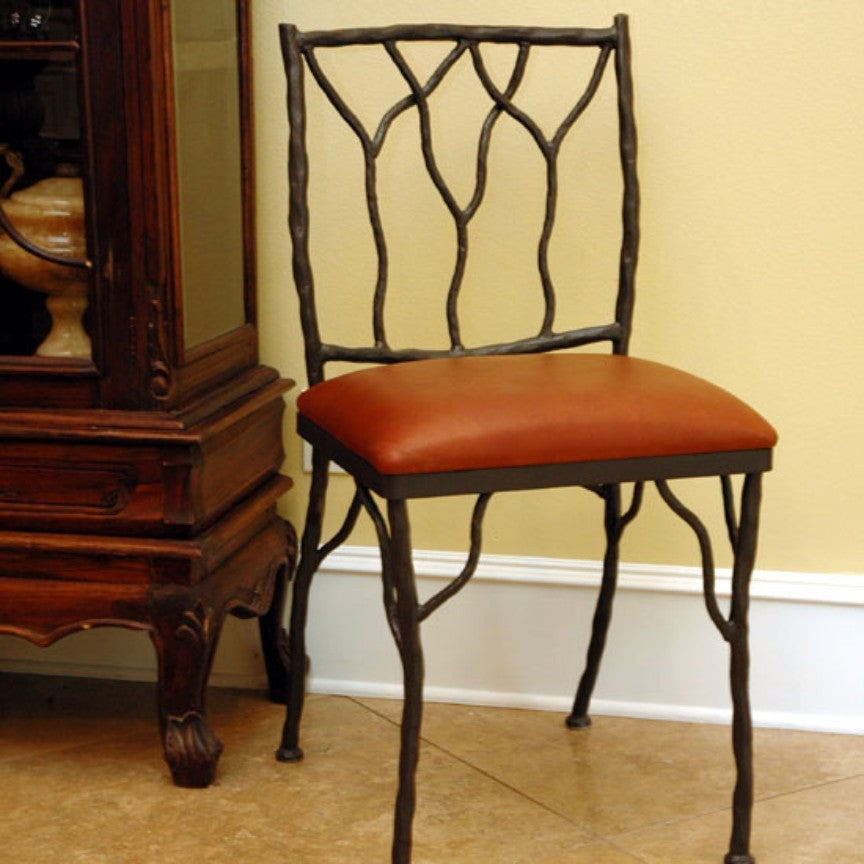
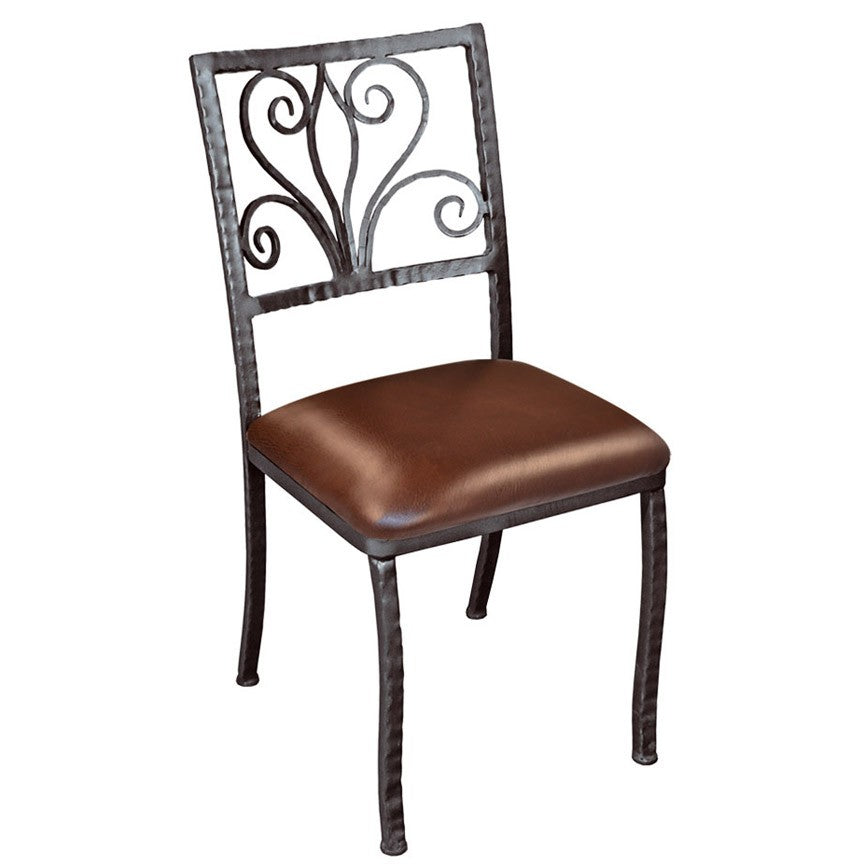
Forged iron brings sculptural strength while open scrollwork allows the wall, rug and table to remain visible. Wood or upholstered seats can soften the metal and connect it with other furnishings.
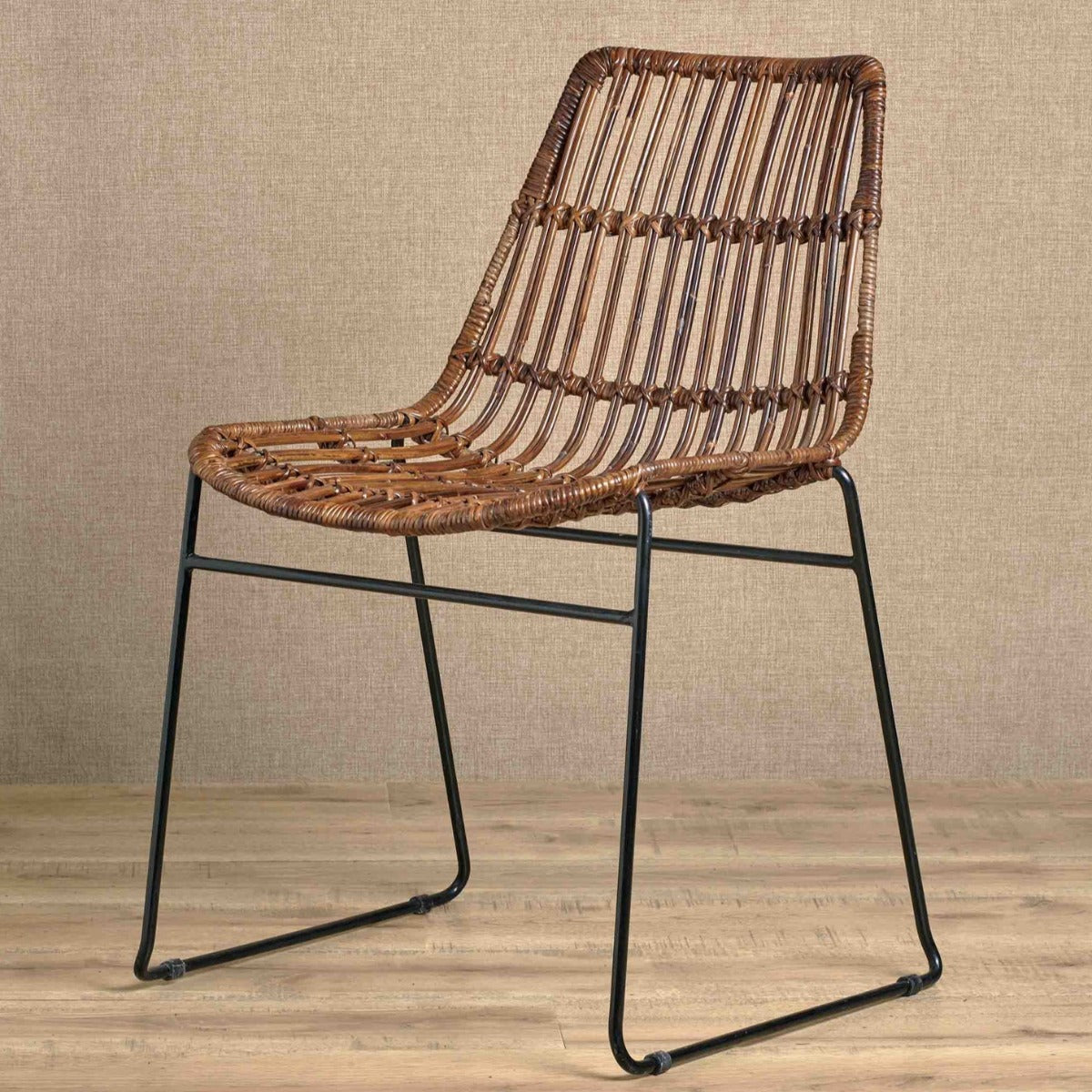
Natural materials add warmth and a relaxed quality. Carved wood, woven rattan and cane work especially well when the room already contains a substantial amount of iron or stone.
Cushioned seats and upholstered backs invite longer meals and create a softer, more refined appearance. Consider fabric care, cushion firmness and the effect of compression on the usable seat height.
Gathered with Intention
Side chairs make the most of the usable space along a table, while coordinating armchairs can give the ends of a rectangular table or the curve of a large round table a more finished presence.
The chairs do not have to be identical. Mixing works best when at least one element repeats—such as the metal finish, wood tone, fabric color, back height or the visual weight of the frame.
Product pages identify the overall dimensions, seat height, arm height when applicable, materials, finish options, upholstery or seat selections, current production time and shipping method.
Some chairs are available for quicker shipment, while others are handcrafted or upholstered after purchase. Review each listing carefully, especially when coordinating multiple pieces or ordering custom finishes and fabrics.
Differences in ironwork, welds, patina, wood grain, cane, woven texture, upholstery and hand-applied finishes are part of the character of artisan-made furniture.
Common Questions
A side chair has no arms and usually fits more easily along the sides of a dining table. An armchair provides additional support and visual presence but requires more width and enough clearance beneath the tabletop or apron.
Many standard dining chairs have a seat approximately 17–19 inches high. The more important measurement is the clearance between the occupied seat and the underside of the tabletop, apron or lowest support, which is often most comfortable around 10–13 inches.
Capacity depends on the chair’s widest overall measurement, usable table edge, table shape, place-setting size and the location of legs, trestles or pedestals. Use the actual chair and table dimensions rather than relying only on the advertised capacity.
Measure from the floor to the highest point of the chair arm, then compare it with the floor-to-apron or floor-to-underside clearance. Leave extra room so the arm does not scrape the table.
No. Coordinated contrast often creates a more collected room. The pieces can relate through finish, wood tone, upholstery, shape or scale without being part of a matching set.
Yes. Side chairs are commonly used along the table, with coordinating armchairs at the ends or in host-chair positions. Confirm the width and arm clearance before planning the final count.
Consider comfort, care, children and pets, stain resistance, cushion firmness and how often the chairs will be used. Upholstery adds softness, while wood and woven seats introduce natural texture.
Availability varies by design. Some chairs are stocked or offered for quicker shipment, while others are handcrafted, finished or upholstered after purchase. Review the production time and return information on the individual product page.
Continue Shopping